
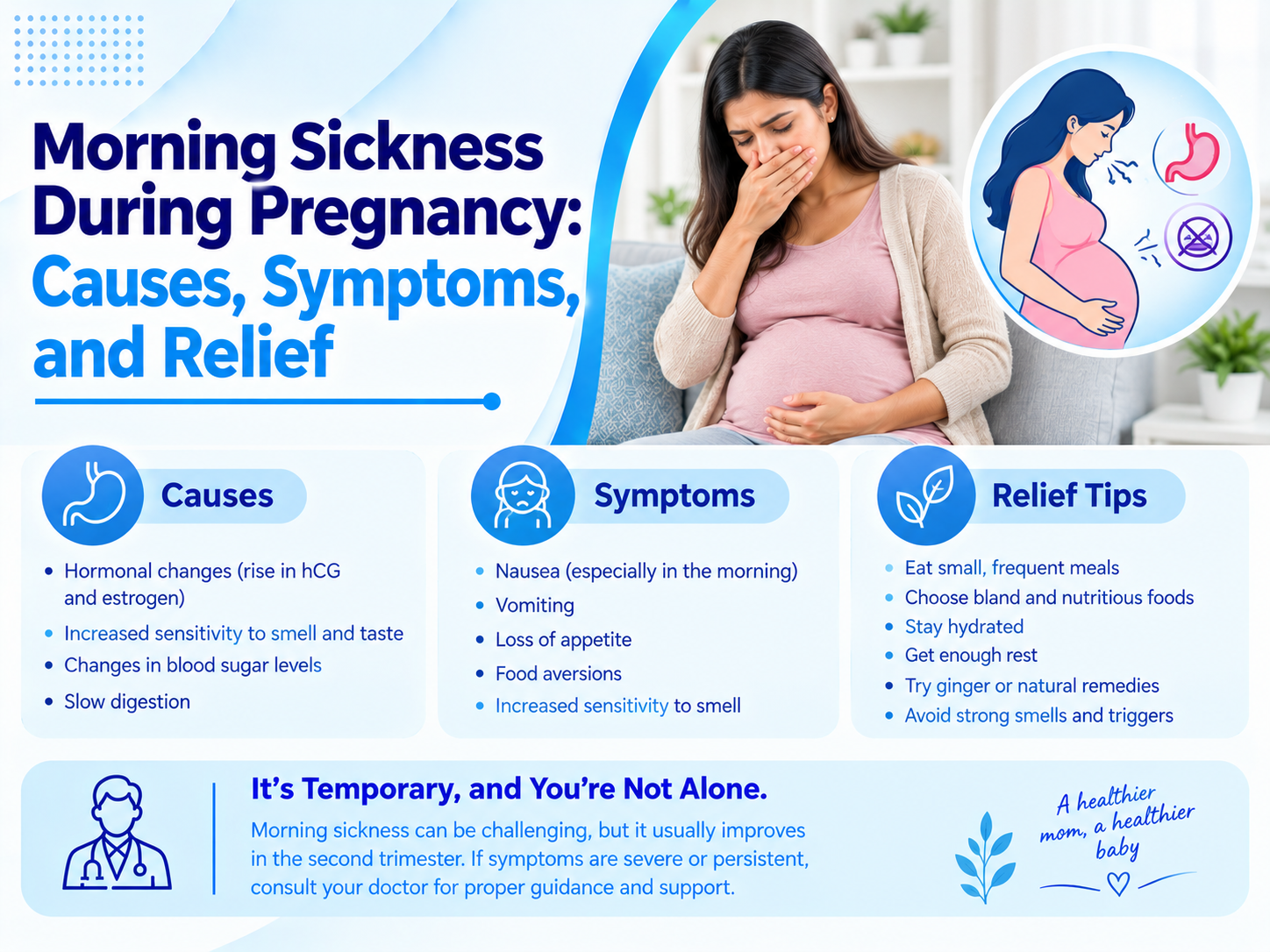
Morning sickness during pregnancy is nausea, with or without vomiting, that usually starts around week 6 and eases by the second trimester. Despite the name, it can strike at any time of day. It is very common, usually harmless to the baby, and manageable with simple changes like small meals, ginger, and rest. At Jain Surgical Hospital, a trusted hospital in Kota, expecting mothers get caring, practical support for this early pregnancy challenge. This guide explains the causes, symptoms, relief options, and warning signs.
What Is Morning Sickness During Pregnancy?
Morning sickness is the common name for nausea and vomiting in early pregnancy. Many women feel queasy in the morning, but others feel it in the afternoon, evening, or all day long.
It usually begins at about 6 weeks of pregnancy and tends to peak in the first trimester. For most women, it settles in the second trimester, though some continue to feel it longer.
Having it does not mean your baby is unwell. In fact, mild to moderate symptoms are a very common part of a normal pregnancy.
What Causes Morning Sickness During Pregnancy?

The exact cause is not fully known. Doctors believe rising pregnancy hormones play a major role, especially hCG and estrogen. Other factors may add to the problem:
- A heightened sense of smell
- An empty stomach and low blood sugar
- Fatigue and poor sleep
- Stress and anxiety
- A sensitive stomach or history of motion sickness or migraines
- Slower digestion during pregnancy
You may be more likely to have severe symptoms if you had morning sickness in an earlier pregnancy, or if your mother or sister did. Carrying twins can also increase the risk.
Common Symptoms of Morning Sickness
Symptoms vary from mild queasiness to frequent vomiting. Typical signs include:
- Nausea, especially in the early weeks
- Vomiting once or several times a day
- Strong dislike of certain foods or smells
- Loss of appetite
- Feeling worse on an empty stomach
- Tiredness and weakness
- Increased saliva
Most women can still eat and drink enough to stay healthy. If you cannot, it is time to speak with your doctor.
Morning Sickness vs Hyperemesis Gravidarum
Not all pregnancy nausea is the same. A small number of women develop a severe form called hyperemesis gravidarum. The table below explains the difference.
| Feature | Morning Sickness | Hyperemesis Gravidarum |
| How common | Very common | About 3 in 100 pregnancies |
| Vomiting | Mild to moderate | Severe and frequent |
| Eating and drinking | Usually possible | Often difficult or impossible |
| Weight | Little or no loss | Noticeable weight loss |
| Dehydration | Uncommon | Common |
| Treatment | Home care and simple remedies | Medical care, sometimes in hospital |
Hyperemesis gravidarum needs medical treatment, since it can cause dehydration and nutritional problems for mother and baby.
When to See a Doctor for Morning Sickness
Mild symptoms can usually be discussed at your next prenatal visit. However, contact your doctor promptly if you notice:
- You cannot keep any food or fluids down for 24 hours
- Vomiting many times a day
- Signs of dehydration such as dark urine, very little urine, dizziness, or a dry mouth
- Weight loss during pregnancy
- Fainting or a racing heartbeat
- Nausea that continues beyond the fourth month
- Severe stomach pain or fever
Choosing the best gynecologist in Kota gives you a doctor who can examine you, rule out other causes, and offer safe treatment quickly.
Safe Ways to Get Relief From Morning Sickness
There is no single cure, but many simple steps help. Try these first:
- Eat small, frequent meals: An empty stomach often worsens nausea
- Keep plain snacks by your bed: A dry biscuit or cracker before getting up can help
- Drink fluids often: Take small sips of water, coconut water, or lemon water through the day
- Choose bland foods: Toast, rice, bananas, and khichdi are usually easier to tolerate
- Avoid triggers: Stay away from strong smells, oily or spicy foods, and stuffy rooms
- Rest well: Tiredness can make nausea worse
- Get fresh air: Open a window or take a gentle walk
Small changes in routine often make a noticeable difference within days.
Ginger, Vitamin B6 and Other Remedies
Some remedies have good support from research. Ginger is the most studied natural option, and many women find relief from ginger tea, ginger candies, or real ginger ale. Vitamin B6, also called pyridoxine, is often suggested as a first medicine step.
If these do not work, doctors may add a safe anti-nausea medicine such as doxylamine. In more severe cases, stronger medicines or fluids through a vein may be needed.
Always speak to your doctor before taking any medicine or supplement during pregnancy, even over-the-counter or herbal ones. The right dose depends on your health and your prenatal vitamin.
Foods That May Help and Foods to Avoid
What you eat can make a real difference. Foods that many women tolerate well include:
- Dry toast, crackers, and puffed rice
- Bananas and apples
- Curd, buttermilk, or plain rice
- Ginger tea and clear soups
- Cold foods, since they have fewer strong smells
Foods that often trigger nausea include:
- Fried, greasy, or very spicy dishes
- Strong-smelling foods
- Large heavy meals
- Caffeinated drinks in excess
Every woman is different, so notice what works for you and stick with it.
Does Morning Sickness Affect the Baby?
Mild to moderate morning sickness does not harm your baby. Even if you eat less for a few weeks, your baby continues to get what it needs from your body stores.
The concern arises only when vomiting is severe, leading to dehydration or major weight loss. This is why persistent or intense symptoms should never be ignored. Taking a prenatal vitamin as advised, ideally before and during early pregnancy, may also help in some women.
Emotional Support During Difficult Weeks
Morning sickness can be exhausting and emotional. Feeling low, irritable, or anxious is understandable, especially if you cannot work or enjoy meals.
Share how you feel with your partner and family, and ask for help with daily tasks. Many women also feel more comfortable speaking to a female gynecologist in Kota, and good communication with your doctor can ease worry quickly.
Why Choose Jain Surgical Hospital for Pregnancy Care
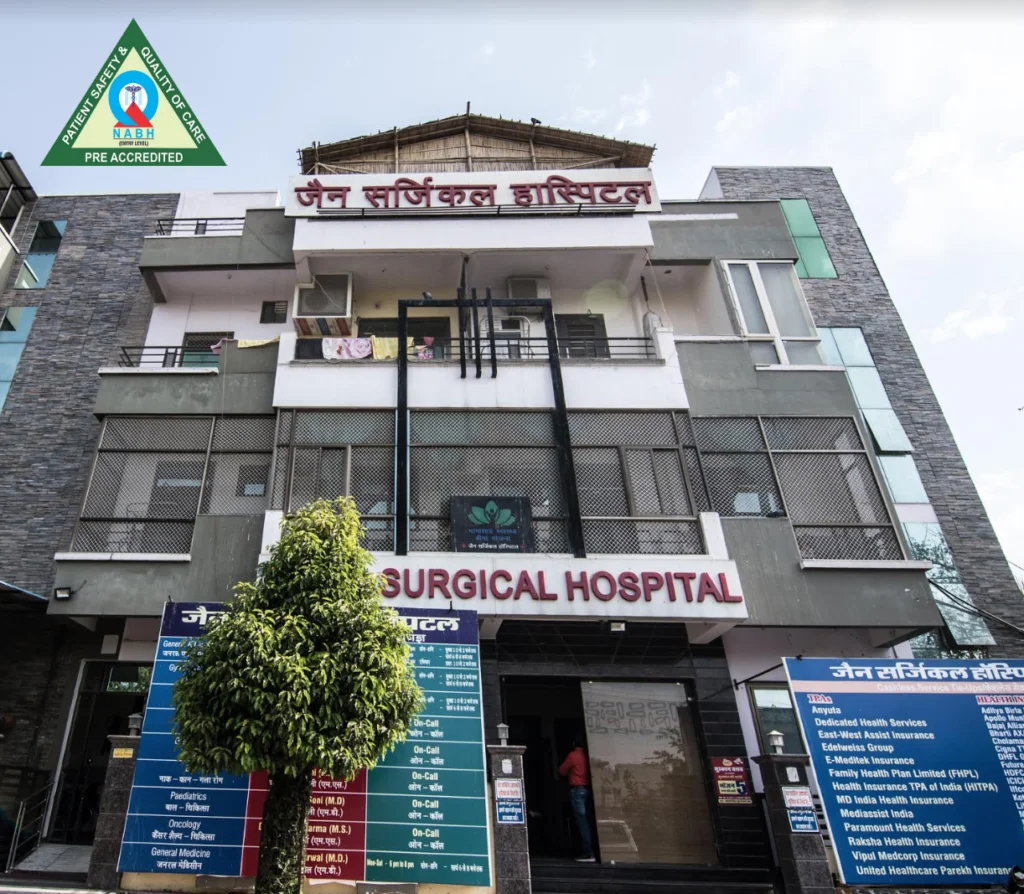
Early pregnancy brings many questions, and you deserve clear answers without feeling rushed. Jain Surgical Hospital offers experienced doctors, modern diagnostic facilities, and a supportive environment for expecting mothers.
Women searching for the best hospital for pregnancy in Kota find personalised guidance for symptoms like nausea, along with regular check-ups and tests. As one of the best hospitals in Kota, and a trusted best maternity hospital in Kota option for many families, the team explains each step in simple language.
Frequently Asked Questions
1. When does morning sickness start and end?
It usually starts around week 6 of pregnancy and improves in the second trimester. Some women continue to feel nausea for longer.
2. Is morning sickness a sign of a healthy pregnancy?
Mild to moderate symptoms are very common and usually not a cause for concern. However, not having morning sickness is also completely normal.
3. Can I take medicine for morning sickness?
Some options, such as vitamin B6 and doxylamine, are commonly used. Always check with your doctor first, since the right choice and dose depend on your situation.
4. What can I eat first thing in the morning to reduce nausea?
Keep a dry biscuit, cracker, or plain toast near your bed and eat a little before getting up. Then follow with small, frequent meals through the day.
5. How do I know if my morning sickness is severe?
If you cannot keep fluids down, vomit many times a day, lose weight, or feel dizzy and dehydrated, see your doctor promptly. These can be signs of hyperemesis gravidarum.
Book Your Pregnancy Consultation Today
You do not have to suffer through morning sickness alone. Whether your symptoms are mild or becoming hard to manage, expert guidance can bring quick relief and peace of mind. Visit Jain Surgical Hospital, a trusted name for pregnancy care in Kota, and consult an experienced gynecologist who can guide you safely. Book your appointment today and feel better as you enjoy your pregnancy journey.