Fissure Treatment Hospital in Kota
Expert Care at Jain Surgical Hospital
Are you experiencing sharp pain during bowel movements, bleeding, or burning around the anal region? You could be suffering from an anal fissure, a common yet extremely painful condition that affects people of all ages. At Jain Surgical Hospital, the most trusted centre for fissure treatment in Kota, our expert proctology team provides the full spectrum of fissure care from non-surgical management to advanced laser treatment – ensuring a pain-free, lasting recovery.
What is Anal Fissure? A Complete Overview
An anal fissure is a small tear or cut in the thin, moist tissue (mucosa) lining the anus, the opening through which stool passes out of the body. This tear causes intense pain during and after bowel movements, and may be accompanied by bleeding and muscle spasms of the anal sphincter.
While anal fissures may seem like a minor problem, they can become a severely debilitating condition when left untreated. The pain can be so intense that many patients begin to avoid bowel movements, which worsens constipation and creates a painful cycle. Seeking timely fissure treatment in Kota at a specialised centre like Jain Surgical Hospital is the most effective way to break this cycle and heal completely.
Acute vs Chronic Fissure: What's the Difference?
Understanding the stage of your fissure helps determine the most appropriate treatment approach:
Feature | Acute Fissure | Chronic Fissure |
Duration | Less than 6 weeks | More than 6–8 weeks |
Appearance | Fresh, clean-edged tear | Indurated edges with sentinel pile/skin tag |
Symptoms | Sharp pain, mild bleeding | Severe pain, pus/discharge, itching |
Treatment | Often responds to medication | Usually requires surgical intervention |
Healing | May heal on its own | Rarely heals without treatment |
Common Causes of Anal Fissure
Anal fissures can develop due to a variety of reasons. The most common causes and contributing factors include:
- Chronic constipation and straining to pass hard, dry stools
- Frequent diarrhoea causing repeated irritation of the anal lining
- Childbirth trauma – fissures are common in women after vaginal delivery
- Low-fibre diet leading to hard stools
- Inflammatory bowel disease (IBD) such as Crohn’s disease
- Anal intercourse causes trauma to the anal mucosa
- Reduced blood flow to the anorectal area, especially in older adults
- Previous anal surgery or injury
- Tight anal sphincter muscle (high resting anal pressure)
Symptoms of an Anal Fissure You Must Not Ignore
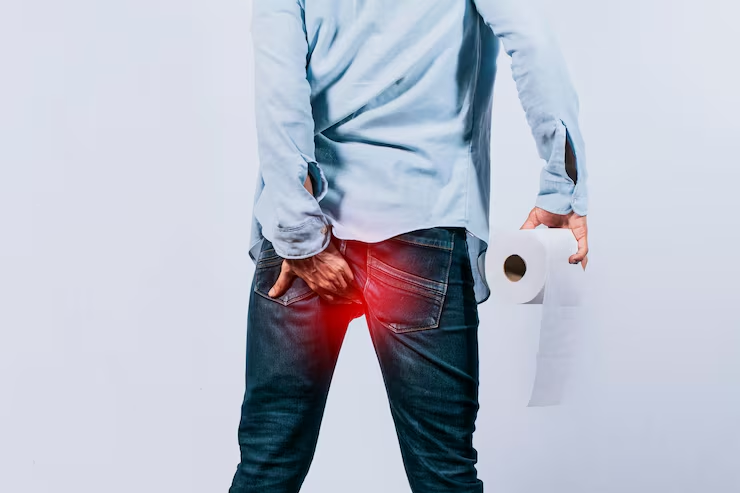
Anal fissure symptoms can significantly impact your daily routine, work, and overall well-being. Recognising these signs early allows for prompt, effective treatment:
- Severe, sharp, or burning pain during bowel movements – often described as passing broken glass
- Persistent pain lasting 30 minutes to several hours after passing stool
- Bright red blood on toilet paper or in the toilet bowl after a bowel movement
- Visible crack or small tear in the skin around the anus
- A small lump or skin tag near the fissure (in chronic cases)
- Burning sensation or itching around the anal opening
- Muscle spasms of the anal sphincter
- Reluctance or fear of bowel movements due to anticipation of pain
- Difficulty in maintaining personal hygiene due to soreness
When Should You See a Fissure Treatment Hospital in Kota?
While mild fissures may resolve with home care, you should consult a fissure specialist without delay if:
- Pain during bowel movements has lasted more than 2–3 weeks
- You notice persistent or recurring bleeding from the anus
- Home remedies and over-the-counter ointments are not providing relief
- You are avoiding bowel movements due to the fear of pain
- You notice a skin tag or lump near the anus (sign of chronic fissure)
- You have been previously treated for a fissure, but symptoms have returned
- You are experiencing significant anxiety, disrupted sleep, or quality of life issues due to fissure pain
How is Anal Fissure Diagnosed?
Diagnosing an anal fissure is straightforward when performed by an experienced proctologist. At Jain Surgical Hospital in Kota, we follow a systematic, patient-friendly diagnostic approach that minimises discomfort while ensuring a precise assessment.
Examination & Diagnostic Process at Jain Surgical Hospital
- Detailed Medical History – Your doctor will ask about the duration, nature, and severity of your symptoms, bowel habits, dietary patterns, and any previous treatments
- Visual Inspection – A gentle visual examination of the perianal area to identify the fissure, its location (most commonly at the posterior midline), and any associated skin tags or sentinel piles
- Digital Rectal Examination (DRE) – Carefully performed only when tolerated, to assess sphincter tone and rule out other anorectal conditions
- Anoscopy – A small, lighted instrument is gently inserted to visualise the inside of the anal canal and identify the internal aspect of the fissure
- Proctoscopy – Used to rule out other causes of rectal bleeding or pain, such as piles, polyps, or inflammatory conditions
- Additional Tests – Blood tests, stool culture, or colonoscopy may be recommended if an underlying condition like Crohn’s disease or tuberculosis is suspected
Fissure Treatment Options Available in Kota
At Jain Surgical Hospital, the premier centre for fissure treatment in Kota, we offer a complete range of medical and surgical treatment options. The right treatment for you will depend on whether you have an acute or chronic fissure, your overall health, and how you have responded to previous treatments.
Non-Surgical / Medical Management of Fissure
For acute fissures and mild chronic cases, our first approach is always conservative (non-surgical) management. This includes:
- High-fibre diet and increased fluid intake to soften stools and reduce straining
- Sitz baths – warm water soaks for 10–15 minutes, 2–3 times daily to relax the sphincter and promote healing
- Topical anaesthetic creams (e.g., Lidocaine) to numb the area and reduce pain during bowel movements
- Topical nitrate ointments (e.g., Glyceryl Trinitrate / GTN) to relax the internal sphincter and improve blood flow to the fissure
- Topical Calcium Channel Blockers (e.g., Diltiazem cream) – an alternative to GTN with fewer side effects
- Stool softeners and bulk-forming laxatives to prevent constipation
- Pain relief medications as prescribed by our doctor
Laser Fissure Treatment
Laser fissure treatment is the most advanced, minimally invasive, and patient-preferred option for treating anal fissures – particularly chronic or recurring cases. At Jain Surgical Hospital in Kota, we use state-of-the-art laser technology to precisely treat the fissure with maximum effectiveness and minimal discomfort.
During laser fissure treatment, a focused laser beam is used to relax the overactive internal anal sphincter (the root cause of chronic fissures), promote tissue regeneration, and eliminate the fissure – all without any external cuts or stitches.
- Completely bloodless – no cutting, no stitches
- Virtually painless procedure performed under local or short general anaesthesia
- Day-care procedure – patients go home the same day
- No damage to sphincter muscles – zero risk of incontinence
- Rapid tissue healing due to the bio-stimulating effect of laser energy
- Minimal post-operative care required
- Return to work and daily routine within 2–3 days
Lateral Internal Sphincterotomy (LIS Surgery)
Lateral Internal Sphincterotomy (LIS) is the gold-standard surgical treatment for chronic anal fissures that have not responded to medical or laser management. In this procedure, the surgeon makes a small, precise cut in the lower part of the internal anal sphincter to reduce excessive muscle tension – the primary cause of chronic fissure and impaired healing.
- Highly effective – success rate exceeds 95% for chronic fissures
- Performed under short general or spinal anaesthesia
- Quick, 20–30 minute procedure with minimal blood loss
- Most patients experience immediate relief from fissure pain
- Short hospital stay of 1–2 days
- Full recovery typically within 2–4 weeks
Botox Injection Therapy for Fissure
Botox (Botulinum Toxin) injection is an effective, non-surgical option for treating chronic anal fissures – especially in patients who want to avoid surgery or who have not responded to topical treatments. The injection temporarily paralyses the internal sphincter muscle, reducing spasm and allowing the fissure to heal naturally over 2–3 months.
- Minimally invasive office or OT-based procedure
- Effective alternative for patients who are poor surgical candidates
- No incisions, no stitches, no hospital stay
- Temporary effect lasts 2–4 months – healing occurs during this period
- Can be repeated if required
- May be combined with other treatments for optimal outcomes
Laser Fissure Treatment in Kota – Why It's the Best Choice
With multiple treatment options available, many patients ask: Which is the best treatment for fissure in Kota? For most patients – especially those with chronic, recurring, or painful fissures – laser treatment offers the ideal combination of effectiveness, safety, speed, and comfort. Here’s why Jain Surgical Hospital recommends laser fissure treatment as the preferred approach:
Benefits of Laser Treatment Over Traditional Surgery
Parameter | Laser Treatment | Traditional Surgery (LIS) |
Pain Level | Virtually Painless | Mild to Moderate |
Blood Loss | None | Minimal |
Hospital Stay | Day-Care (Same Day) | 1–2 Days |
Recovery Time | 3–5 Days | 1–2 Weeks |
Risk of Incontinence | None | Very Low |
Wound Size | No External Cut | Small Incision |
Recurrence Rate | Very Low | Low |
Suitable For | All Fissure Types | Chronic/Complex Fissures |
Why Choose Jain Surgical Hospital for Fissure Treatment in Kota?
Choosing the right hospital for fissure treatment makes a critical difference to your recovery experience and long-term outcome. Here is why patients across Kota, Bundi, Jhalawar, Baran, and the broader Hadoti region choose Jain Surgical Hospital:
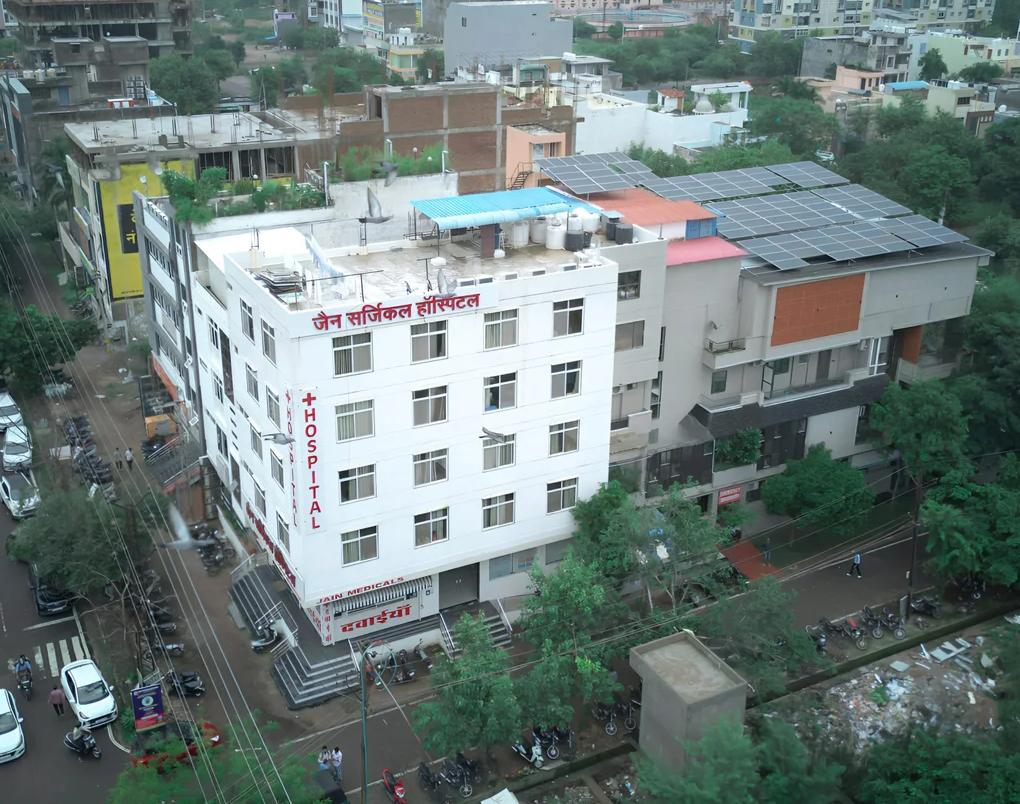
State-of-the-Art Facility & Modular Operation Theatre
- NABH-accredited hospital – guaranteeing quality care, safety standards, and patient rights
- Modular Operation Theatres with Laminar Airflow Systems minimizing surgical infection risk
- Advanced laser machines for precise, bloodless, and effective fissure treatment
- Modern diagnostic equipment – anoscopy, proctoscopy, endoscopy, imaging
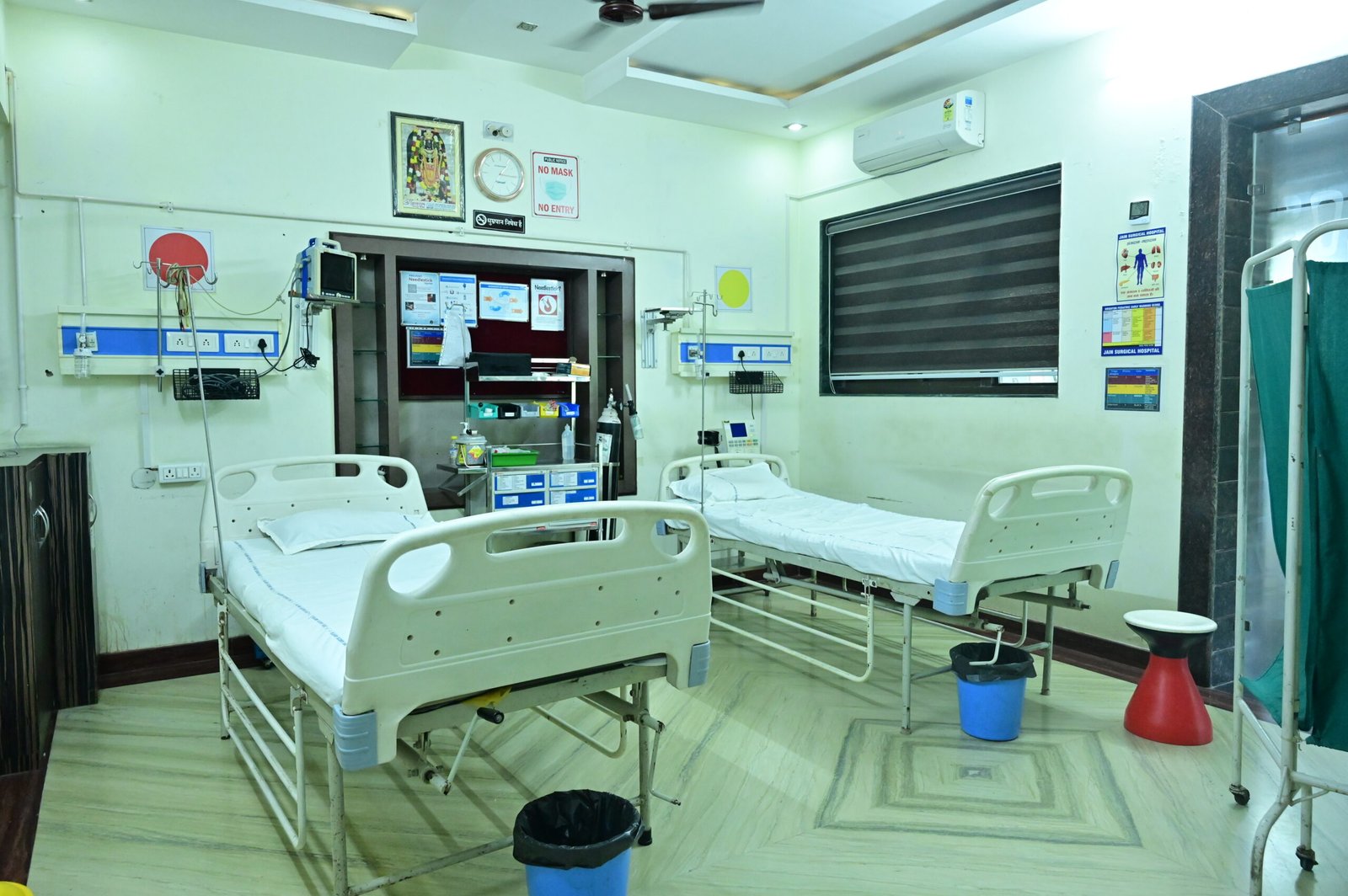
- Comfortable, hygienic in-patient rooms with 24×7 nursing care
- 24-hour emergency services and ICU support
- Empanelled under Chiranjeevi Yojana and RGHS for cashless treatment
- Transparent pricing with no hidden charges – affordable fissure treatment for all
What Our Patient's Talking ?
Jain Surgical Hospital make itself a brand name is Laparoscopic surgeries.
EXCELLENTTrustindex verifies that the original source of the review is Google. Hii this is Sourav Sharma "I recently underwent an abscess surgery at Jain Surgical Hospital, and I am very pleased with the care I received. The doctors were highly professional, explained the entire procedure clearly, and ensured I was comfortable throughout. The nursing staff was attentive, and the hospital premises were kept clean and hygienic. I highly recommend Jain Surgical Hospital for anyone seeking quality surgical care. Thank you to the entire team for a smooth recovery!"Posted on GoogleTrustindex verifies that the original source of the review is Google. Worst staff, service, doctors and housekeeping dont get operated here. It was worst exprerience.Posted on GoogleTrustindex verifies that the original source of the review is Google. Posted on GoogleTrustindex verifies that the original source of the review is Google. I would like to express my appreciation for the services provided by Jain Surgical Hospital. The doctors were knowledgeable and attentive, and the nursing staff were supportive and courteous. The facilities were clean and well-maintained, ensuring a comfortable environment for patients. Overall, it was a satisfactory and well-managed experience.Posted on GoogleTrustindex verifies that the original source of the review is Google. I underwent laparoscopic surgery for gallbladder removal here from Dr. Amrish Pataudi and the experience has been horrible, during my stay the hospital seemed very shady with least hygiene. And staff being very reluctant and very insensitive. Post my surgery I have got infection in my surgical sites which has turned out to be TB(Tuberculosis) due to which I had to undergo another major abdomen surgery which left me in lot of pain and mental distress and a 1 year long antibiotic treatment. Informing Dr Pataudi I came to know many patients faced the same issue post their surgery who underwent it during that time, and it seemed to be due to infected surgical equipment used during surgery. Please think twice before you get any treatment done from this hospital I had the worst experience of my life. Regretting till date. And getting so many such post surgery complication cases the doctor and the hospital administration has the guts to continue the business for the making money at the cost of people’s lives without adhering to any proper surgical standards.Posted on GoogleTrustindex verifies that the original source of the review is Google. Best dr.neat and clean hospital with all the facilities and all the staff are trained with good conversationPosted on GoogleTrustindex verifies that the original source of the review is Google. Great experience at jain surgical Hospital.dr amrish is very knowledgeable and caring. The staff is supportive and the hospital is clean.highly recommendedPosted on GoogleTrustindex verifies that the original source of the review is Google. Best surgical hospital in kotaPosted on GoogleTrustindex verifies that the original source of the review is Google. The hospital staff is not good a long wait of 1.5 hours to meet for doctor.poor staffPosted on GoogleTrustindex verifies that the original source of the review is Google. Advanced laparoscopic treatment ensures precise surgery with smaller incisions, less pain, and shorter hospital stays.
Frequently Asked Questions About Fissure Treatment in Kota
Is an anal fissure a serious condition?
While a fissure is not life-threatening, it can cause severe pain, bleeding, and a significant reduction in quality of life. Chronic fissures rarely heal without proper treatment and can worsen over time. Early consultation with a fissure specialist in Kota at Jain Surgical Hospital is always recommended.
Can a fissure heal on its own without treatment?
Acute fissures (less than 6 weeks old) may heal with dietary changes, stool softeners, and sitz baths in about 50% of cases. However, chronic fissures almost always require medical or surgical intervention. If your symptoms persist beyond 2–3 weeks, please consult our specialist.
Is laser fissure treatment painful?
No. Laser fissure treatment at Jain Surgical Hospital is performed under local or short general anaesthesia, making the procedure completely painless. Post-procedure discomfort is minimal and managed with simple pain relievers. Most patients are surprised by how comfortable the recovery is.
How long does recovery take after fissure treatment?
Recovery depends on the type of treatment. After laser fissure treatment, most patients resume normal activities within 2–3 days. After LIS surgery, full healing typically takes 2–4 weeks. Our team provides detailed aftercare instructions and follow-up support throughout your recovery.
Can a fissure recur after treatment?
With laser treatment or LIS surgery performed by an expert, recurrence rates are very low. However, maintaining a high-fibre diet, staying well-hydrated, and avoiding straining during bowel movements are essential habits to prevent recurrence.
Is a fissure the same as piles (haemorrhoids)?
No. A fissure is a tear or cut in the anal lining, while piles (haemorrhoids) are swollen blood vessels inside or around the anus. Both conditions can cause pain and bleeding, but they are different diagnoses requiring different treatments. At Jain Surgical Hospital, our expert proctologists will accurately diagnose and treat your specific condition.
Which is the best hospital for fissure treatment in Kota?
Jain Surgical Hospital is widely regarded as the best centre for fissure treatment in Kota. With a NABH-accredited facility, 14+ years of expert proctology care, advanced laser technology, and thousands of satisfied patients, we are your most trusted choice for fissure care in Kota and Rajasthan.