
Piles Treatment Hospital in Kota
Advanced & Painless Surgery at Jain Surgical Hospital
Piles (haemorrhoids) are one of the most common yet least-talked-about conditions affecting millions of Indians – and you are certainly not alone. If you are experiencing bleeding during bowel movements, discomfort, itching, or a painful lump near the anus, you could be suffering from piles. The reassuring news is that piles are completely treatable, and at Jain Surgical Hospital – the most trusted centre for piles treatment in Kota – we offer the full spectrum of care, from simple dietary management to advanced laser and stapler surgery, performed by one of Kota’s most experienced piles surgeons.
What are Piles (Haemorrhoids)? A Complete Guide
Piles, medically known as haemorrhoids, are swollen and inflamed clusters of veins located in and around the lower rectum and anus. Much like varicose veins in the legs, these blood vessels become enlarged when subjected to repeated or sustained pressure – leading to discomfort, bleeding, prolapse, and other distressing symptoms.
It is estimated that over 50% of individuals will experience piles at some point in their lifetime, making it one of the most widespread anorectal conditions. Despite being so common, piles remain heavily stigmatised, causing many patients to delay seeking treatment – often allowing the condition to worsen from a mild, easily manageable problem to a severe one requiring surgery. At Jain Surgical Hospital in Kota, we encourage all patients to seek early, professional help without embarrassment.
Internal Piles vs External Piles – Key Differences
Piles are broadly classified into two types based on their location. Understanding which type you have is important for determining the most appropriate piles treatment in Kota:
Feature | Internal Piles | External Piles |
Location | Inside the anal canal (above the dentate line) | Outside the anus, under the skin |
Pain Level | Usually painless unless prolapsed | Often painful, especially when thrombosed |
Bleeding | Common – bright red blood | Less common |
Visibility | Not visible externally | Visible as a lump outside the anus |
Treatment | Medical, laser, banding, stapler | Ointments, laser, or surgical removal |
Grades of Piles – Grade 1 to Grade 4 Explained
Internal piles are classified into four grades based on their severity and the degree of prolapse. The grade of your piles directly determines which treatment approach is most appropriate:
Grade | Description | Symptoms | Treatment |
Grade I | Small internal piles that bleed but do not prolapse outside the anus | Painless bleeding; no visible lump | Medical management & dietary changes |
Grade II | Prolapse during straining but return inside spontaneously | Bleeding, mild discomfort, mucous discharge | Rubber band ligation or laser treatment |
Grade III | Prolapse during straining; must be pushed back manually | Pain, bleeding, itching, heaviness | Laser treatment or stapler haemorrhoidectomy |
Grade IV | Permanently prolapsed; cannot be pushed back | Severe pain, bleeding, large lump, incontinence of mucus | Stapler or open haemorrhoidectomy |
What Causes Piles? Common Reasons & Risk Factors
Piles develop when the blood vessels in the anal region are subjected to increased pressure over a sustained period. Several factors can contribute to this:
Lifestyle Habits That Lead to Piles
- Chronic constipation – straining during difficult bowel movements is the single biggest cause of piles
- Low-fibre diet – insufficient fruits, vegetables, and wholegrains result in hard, dry stools
- Inadequate fluid intake – dehydration leads to harder stools and more straining
- Prolonged sitting on the toilet – using a phone or reading while on the toilet increases anal pressure
- Sedentary lifestyle – physical inactivity slows bowel movement and increases pressure on rectal veins
- Chronic diarrhoea – repeated loose stools irritate the anal lining and weaken supporting tissue
- Heavy lifting – regularly lifting heavy weights increases intra-abdominal and anorectal pressure
- Obesity – excess body weight adds sustained pressure on the pelvic and anorectal blood vessels
Signs & Symptoms of Piles You Should Not Ignore
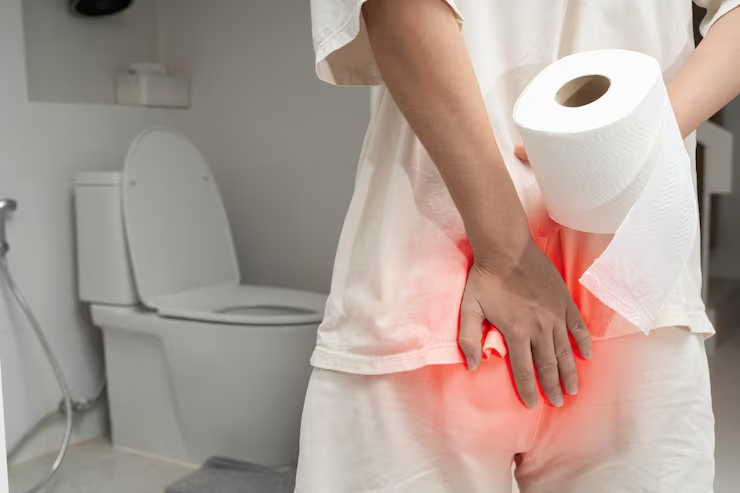
Piles symptoms can range from mildly inconvenient to severely debilitating. Recognising these signs early and seeking piles treatment in Kota promptly can prevent the condition from worsening:
- Painless, bright red bleeding during or after bowel movements, blood may appear on toilet paper or in the toilet bowl
- A soft, fleshy lump protruding from or around the anus (prolapsed pile)
- Itching, burning, or irritation around the anal opening
- A feeling of incomplete bowel emptying even after passing stool
- Mucous discharge from the anus, causing staining or wetness
- Discomfort or a dull aching pain around the anus, especially when sitting
- Severe, acute pain near the anus – usually indicating a thrombosed external pile
- Anaemia (in severe, long-standing cases with repeated heavy bleeding)
When is the Right Time to See a Piles Treatment Hospital in Kota?
You should visit a piles specialist without delay if:
- You notice any bleeding from the anus, even if painless, this should never be ignored
- A lump outside the anus does not go back on its own or is painful
- Itching or discharge is causing significant discomfort in daily life
- Over-the-counter creams and suppositories have not provided lasting relief
- Pain is interfering with your ability to sit, walk, or work
- You have been previously treated for piles, and symptoms have returned
- You feel anxious, embarrassed, or depressed because of your piles symptoms
How Are Piles Diagnosed at Jain Surgical Hospital?
Accurate diagnosis of piles, including their type, grade, and any associated conditions, is the essential first step toward the right treatment. Our diagnostic approach is thorough yet gentle, respecting your comfort and privacy at every step.
Physical Examination & Diagnostic Procedures Used
- Detailed Medical History – A careful discussion of your symptoms, duration, bowel habits, diet, lifestyle, medications, and family history
- Visual Perianal Inspection – External examination to identify visible external piles, skin tags, prolapsed internal piles, fissures, or fistulas
- Digital Rectal Examination (DRE) – A gloved, lubricated finger examination to assess the anal canal, sphincter tone, and presence of internal piles or masses
- Proctoscopy – A small, lighted tubular instrument is gently introduced into the anal canal to directly visualise internal piles, their grade, and any bleeding sources
- Anoscopy – A shorter version of proctoscopy used to clearly view the lower anorectal region and dentate line
- Sigmoidoscopy or Colonoscopy – Recommended when rectal bleeding may have a higher origin (polyps, colitis, colorectal cancer) or when the patient is above 45 years of age
- Blood Tests – To assess for anaemia due to chronic bleeding, and to evaluate overall fitness for surgery if required
Piles Treatment Options Available in Kota
At Jain Surgical Hospital, we believe every patient deserves a personalised treatment plan. Our approach ranges from conservative medical management for early-grade piles to advanced laser and stapler surgery for severe cases. Here is a comprehensive overview of all the pile treatment options available in Kota at our hospital:
Non-Surgical Treatment for Piles (Medicines & Lifestyle Changes)
For Grade I and early Grade II piles, non-surgical management is often highly effective in controlling symptoms and preventing progression. This includes:
- High-fibre diet – fruits, vegetables, whole grains, legumes – to soften stools and reduce straining
- Adequate hydration – 8–10 glasses of water daily to prevent constipation
- Stool softeners and bulk-forming agents (e.g., Isabgol/Psyllium husk)
- Topical ointments and creams to relieve pain, itching, and inflammation
- Sitz baths – warm water soaks 2–3 times daily to soothe the anal region
- Flavonoid medications (e.g., Daflon) to strengthen blood vessel walls and reduce swelling
- Avoiding prolonged sitting on the toilet and heavy lifting
- Regular, gentle exercise to improve bowel function and reduce pelvic pressure
Rubber Band Ligation for Piles
Rubber Band Ligation (RBL) is a widely used, minimally invasive office procedure for treating Grade I and Grade II internal piles. In this technique, a small elastic rubber band is placed around the base of the pile using a special applicator. The band cuts off the blood supply to the haemorrhoidal tissue, which shrivels and falls off naturally within 7–10 days.
- Quick, outpatient procedure, no anaesthesia required in most cases
- Effective for Grade I and II internal piles
- No incisions or stitches
- Mild discomfort or pressure for 1–2 days after the procedure
- May require more than one session for multiple piles
- Not suitable for external piles or Grade III–IV internal piles
Laser Piles Treatment in Kota
Laser piles surgery is the most advanced, most comfortable, and most preferred treatment for piles in Kota today, and Jain Surgical Hospital was the first hospital in Kota to introduce this life-changing technology. In laser piles treatment, a precisely controlled laser beam is directed at the haemorrhoidal tissue to shrink and obliterate it – without any external cuts, stitches, or significant blood loss.
- 100% bloodless procedure – no cuts, no stitches, no wound
- Virtually painless – most patients are surprised by how comfortable recovery is
- Day-care procedure – go home the same day, usually within a few hours
- Suitable for Grade I, II, and most Grade III piles
- Rapid recovery – return to work and daily routine within 2–3 days
- Extremely low risk of recurrence when performed by an expert
- No risk of incontinence – sphincter muscles are completely preserved
- Safe for diabetic patients, elderly patients, and those with multiple health conditions
Stapler Hemorrhoidectomy Surgery
Stapler haemorrhoidectomy – also known as Procedure for Prolapse and Haemorrhoids (PPH) – is the gold-standard surgical treatment for Grade III and Grade IV internal piles. In this procedure, a circular surgical stapling device is used to resect (remove) a ring of excess haemorrhoidal tissue and simultaneously restore the remaining tissue to its normal anatomical position inside the anal canal.
- Highly effective for advanced-grade (Grade III and IV) prolapsed piles
- Shorter operation time compared to open haemorrhoidectomy
- Less post-operative pain as the staple line is above the pain-sensitive dentate line
- Hospital stay of 1–2 days
- Faster return to normal activities – typically within 1–2 weeks
- Excellent long-term results with low recurrence rates
- Not suitable for external piles – designed specifically for internal prolapsed piles
Open Hemorrhoidectomy
Open haemorrhoidectomy (Milligan-Morgan technique) is the traditional surgical method for removing large, Grade IV, or complex haemorrhoids. In this procedure, the haemorrhoidal tissue is surgically excised (cut away) under general or spinal anaesthesia, and the wound is either left open to heal naturally or partially closed.
- Highly effective for very large, advanced, or complicated piles
- Suitable for Grade IV piles, mixed haemorrhoids, or cases with a significant external component
- Definitive, long-lasting cure with very low recurrence
- Hospital stay of 2–3 days
- Recovery takes 2–4 weeks – slightly longer than laser or stapler surgery
- More post-operative discomfort compared to laser or stapler methods
Why Choose Jain Surgical Hospital for Piles Treatment in Kota?
There are many hospitals in Kota, but Jain Surgical Hospital stands apart as the most experienced, most trusted, and most advanced centre for piles treatment in Kota. Here is why thousands of patients choose us:
Advanced Modular OT with Latest Technology
- A NABH-accredited hospital is the gold standard for quality and patient safety in India
- Modular Operation Theatres with Laminar Airflow Systems minimise infection risk
- State-of-the-art laser systems for bloodless, precise piles surgery
- Advanced diagnostic equipment, proctoscopy, anoscopy, colonoscopy, imaging
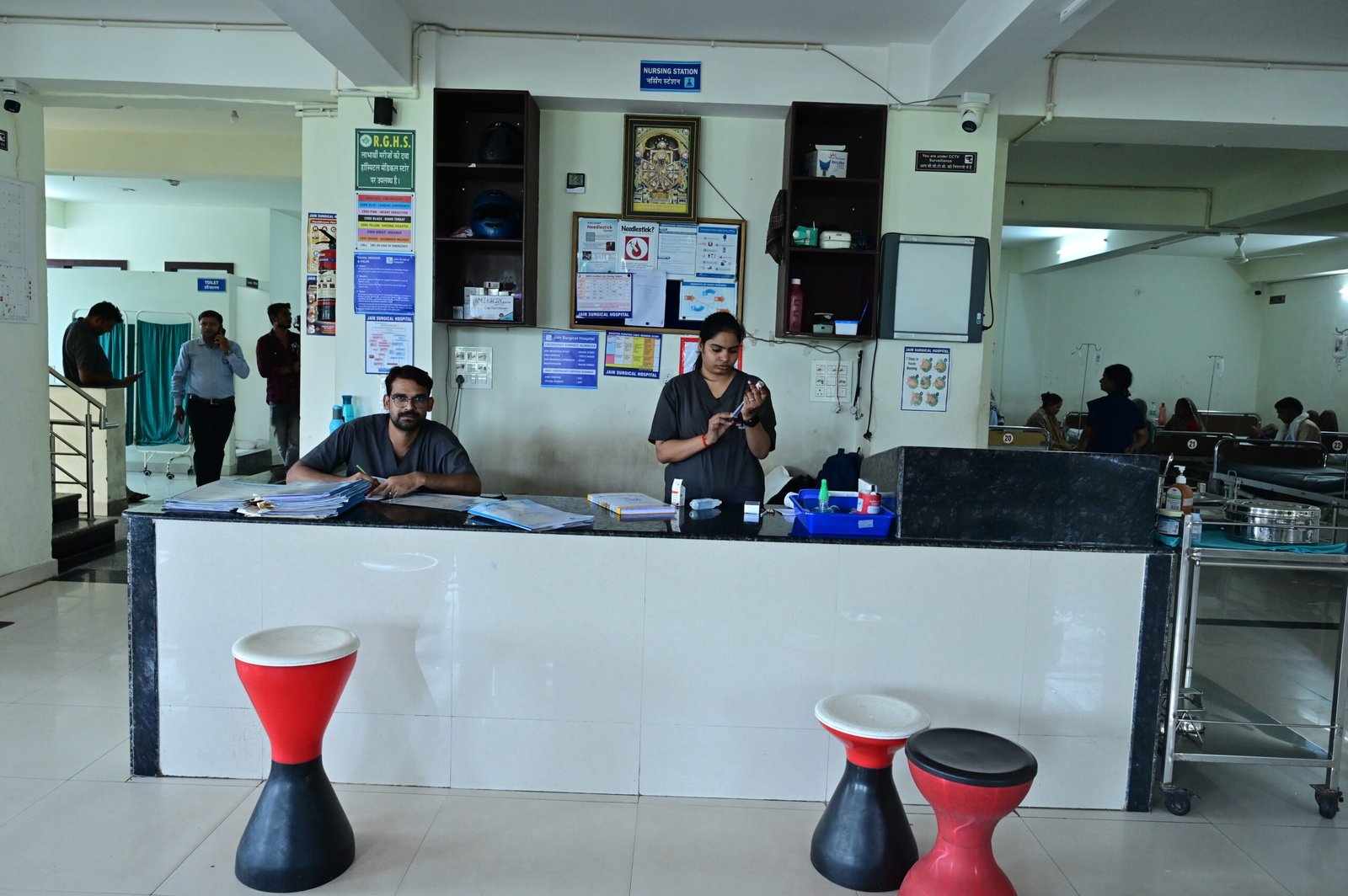
- Modern, hygienic in-patient wards with dedicated nursing care
- 24-hour emergency services and ICU support
- Empanelled under Chiranjeevi Yojana and RGHS cashless piles treatment available
- Transparent, affordable pricing with zero hidden charges
- Friendly and professional staff ensuring complete discretion and dignity
What Happens If Piles is Left Untreated?
Many patients hope that piles will resolve on their own and delay seeking treatment for months or even years. Unfortunately, piles rarely improve without proper management and almost always worsen over time. Here is what can happen if piles are left untreated:
- Progression from early-grade to advanced Grade III or IV piles requiring surgery
- Chronic anaemia due to persistent rectal bleeding – leading to fatigue, weakness, and breathlessness
- Development of a thrombosed haemorrhoid – an acutely painful, blood-clot-filled lump requiring urgent treatment
- Strangulated piles – when a prolapsed pile is cut off from its blood supply, causing severe pain and risk of tissue death
- Incontinence of mucus and faecal soiling – affecting dignity and quality of life
- Skin breakdown and infection around the anus from persistent moisture and discharge
- Secondary conditions such as fissures and fistulas developing alongside untreated piles
- Chronic anxiety, depression, and social withdrawal due to embarrassment and unrelenting symptoms
What Our Patient's Talking ?
Jain Surgical Hospital make itself a brand name is Laparoscopic surgeries.
EXCELLENTTrustindex verifies that the original source of the review is Google. Hii this is Sourav Sharma "I recently underwent an abscess surgery at Jain Surgical Hospital, and I am very pleased with the care I received. The doctors were highly professional, explained the entire procedure clearly, and ensured I was comfortable throughout. The nursing staff was attentive, and the hospital premises were kept clean and hygienic. I highly recommend Jain Surgical Hospital for anyone seeking quality surgical care. Thank you to the entire team for a smooth recovery!"Posted on GoogleTrustindex verifies that the original source of the review is Google. Worst staff, service, doctors and housekeeping dont get operated here. It was worst exprerience.Posted on GoogleTrustindex verifies that the original source of the review is Google. Posted on GoogleTrustindex verifies that the original source of the review is Google. I would like to express my appreciation for the services provided by Jain Surgical Hospital. The doctors were knowledgeable and attentive, and the nursing staff were supportive and courteous. The facilities were clean and well-maintained, ensuring a comfortable environment for patients. Overall, it was a satisfactory and well-managed experience.Posted on GoogleTrustindex verifies that the original source of the review is Google. I underwent laparoscopic surgery for gallbladder removal here from Dr. Amrish Pataudi and the experience has been horrible, during my stay the hospital seemed very shady with least hygiene. And staff being very reluctant and very insensitive. Post my surgery I have got infection in my surgical sites which has turned out to be TB(Tuberculosis) due to which I had to undergo another major abdomen surgery which left me in lot of pain and mental distress and a 1 year long antibiotic treatment. Informing Dr Pataudi I came to know many patients faced the same issue post their surgery who underwent it during that time, and it seemed to be due to infected surgical equipment used during surgery. Please think twice before you get any treatment done from this hospital I had the worst experience of my life. Regretting till date. And getting so many such post surgery complication cases the doctor and the hospital administration has the guts to continue the business for the making money at the cost of people’s lives without adhering to any proper surgical standards.Posted on GoogleTrustindex verifies that the original source of the review is Google. Best dr.neat and clean hospital with all the facilities and all the staff are trained with good conversationPosted on GoogleTrustindex verifies that the original source of the review is Google. Great experience at jain surgical Hospital.dr amrish is very knowledgeable and caring. The staff is supportive and the hospital is clean.highly recommendedPosted on GoogleTrustindex verifies that the original source of the review is Google. Best surgical hospital in kotaPosted on GoogleTrustindex verifies that the original source of the review is Google. The hospital staff is not good a long wait of 1.5 hours to meet for doctor.poor staffPosted on GoogleTrustindex verifies that the original source of the review is Google. Advanced laparoscopic treatment ensures precise surgery with smaller incisions, less pain, and shorter hospital stays.
Frequently Asked Questions About Piles Treatment in Kota
Are piles dangerous?
Piles are not life-threatening in most cases, but they should not be ignored. Chronic piles can lead to anaemia, thrombosis, strangulation, and significant deterioration in quality of life. Additionally, rectal bleeding should always be evaluated by a doctor to rule out other, more serious conditions such as colorectal cancer.
Can piles be cured without surgery?
Grade I and some Grade II piles can be managed effectively with dietary changes, medications, and rubber band ligation. However, Grade III and IV piles almost always require surgical intervention – laser surgery or stapler haemorrhoidectomy – for a permanent cure. Early-stage piles treated conservatively may recur if lifestyle changes are not maintained.
Is laser pile surgery painful?
No. Laser piles treatment at Jain Surgical Hospital is performed under anaesthesia, making the procedure completely pain-free. Post-operative discomfort is minimal and easily managed with simple pain relief medications. Most patients are pleasantly surprised by how comfortable the experience is.
How long does laser piles surgery take?
The laser piles procedure itself typically takes 20–40 minutes. As it is a day-care procedure, most patients arrive, undergo the surgery, recover briefly, and return home on the same day, usually within 4–6 hours of arriving at the hospital.
Will piles return after surgery?
With expert surgical technique and proper lifestyle changes post-surgery, recurrence rates are very low. Maintaining a high-fibre diet, drinking adequate water, exercising regularly, and avoiding straining are key habits to prevent piles from returning after treatment.
Is piles treatment covered under Chiranjeevi Yojana or RGHS?
Yes. Jain Surgical Hospital is empanelled under both Chiranjeevi Yojana and RGHS schemes, making cashless piles treatment available to eligible beneficiaries. Please bring your relevant health card and documents when visiting. Our billing team will guide you through the entire process.