
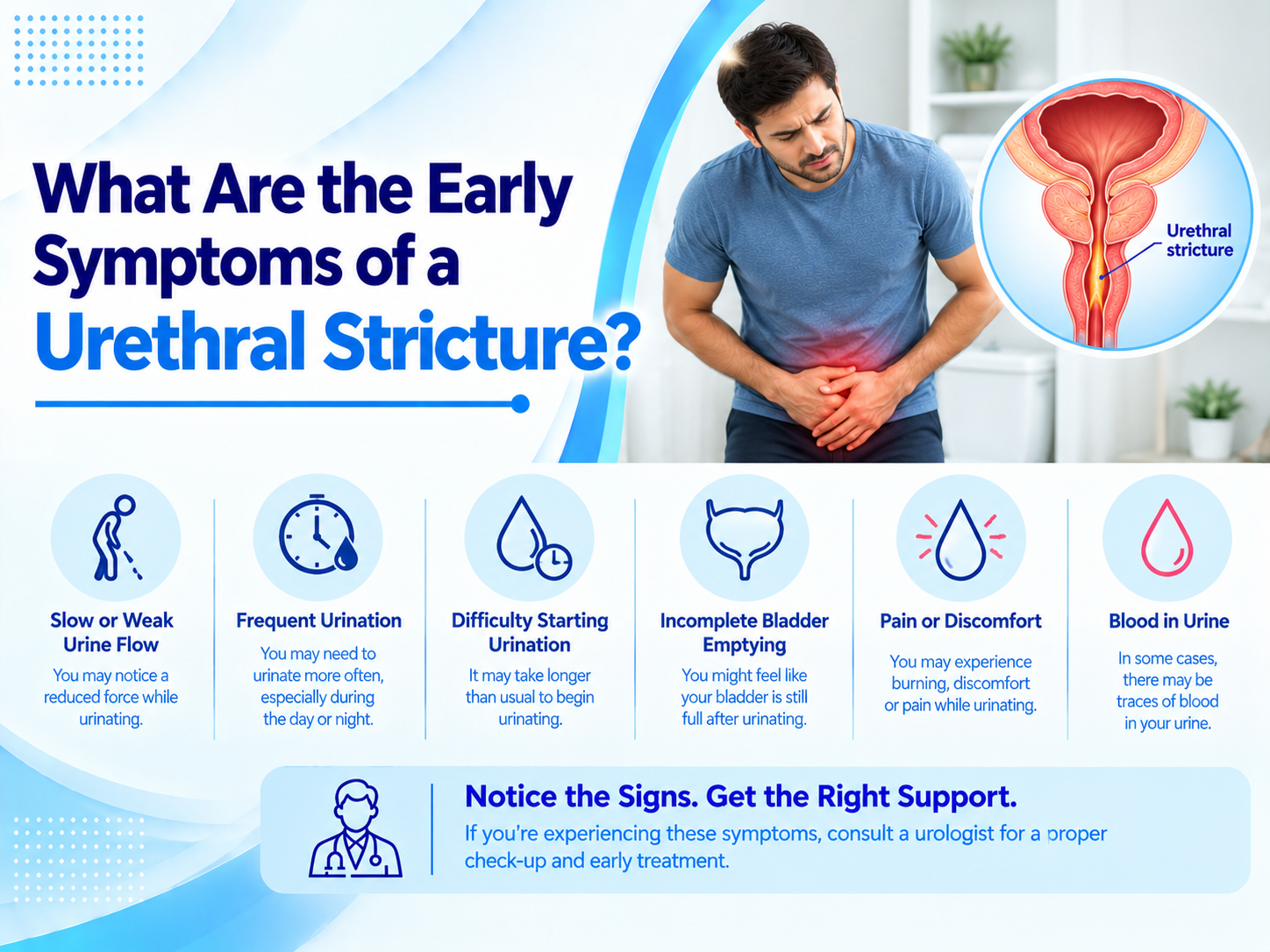
The early symptoms of a urethral stricture include a weak or slow urine stream, straining to pass urine, a feeling that the bladder is not fully empty, and a frequent urge to urinate. Some people also notice a split or spraying stream, or repeated urinary infections. These signs appear because scar tissue is narrowing the tube that carries urine out of the body. At Jain Surgical Hospital, a trusted hospital in Kota, men receive careful evaluation and clear guidance when urinary flow changes. This guide explains the warning signs, causes, and treatment options.
What Is a Urethral Stricture?
A urethral stricture is a narrowing of the urethra, the tube that carries urine from the bladder out of the body. The narrowing is caused by scar tissue, which restricts how freely urine can flow.
The condition is much more common in men than in women. This is because the male urethra is longer and more exposed to injury, infection, and medical procedures.
Getting timely urethral stricture treatment matters because the narrowing usually becomes worse over time, not better.
Early Symptoms of a Urethral Stricture You Should Not Ignore
Early signs are often mild and easy to dismiss. Many men assume they are a normal part of getting older. Watch for these symptoms:
- A weak or slow urine stream
- A stream that splits or sprays instead of flowing straight
- Straining or pushing to start or continue urinating
- A feeling that the bladder does not empty completely
- Frequent urges to urinate, including at night
- Dribbling of urine after finishing
- Needing to take longer than usual in the bathroom
A weak urine stream is considered the hallmark sign. If it keeps getting weaker over weeks or months, it deserves a proper check-up.
Other Symptoms That Can Appear as the Condition Progresses
As the narrowing increases, additional symptoms may develop:
- Pain or burning while urinating
- Repeated urinary tract infections
- Blood in the urine or semen
- Lower belly or pelvic pain
- Swelling or discomfort in the penis area
- Reduced amount of urine passed
Because these signs overlap with other urinary problems, only a doctor can confirm the cause. Seeing an experienced urologist in Kota helps you avoid months of guesswork.
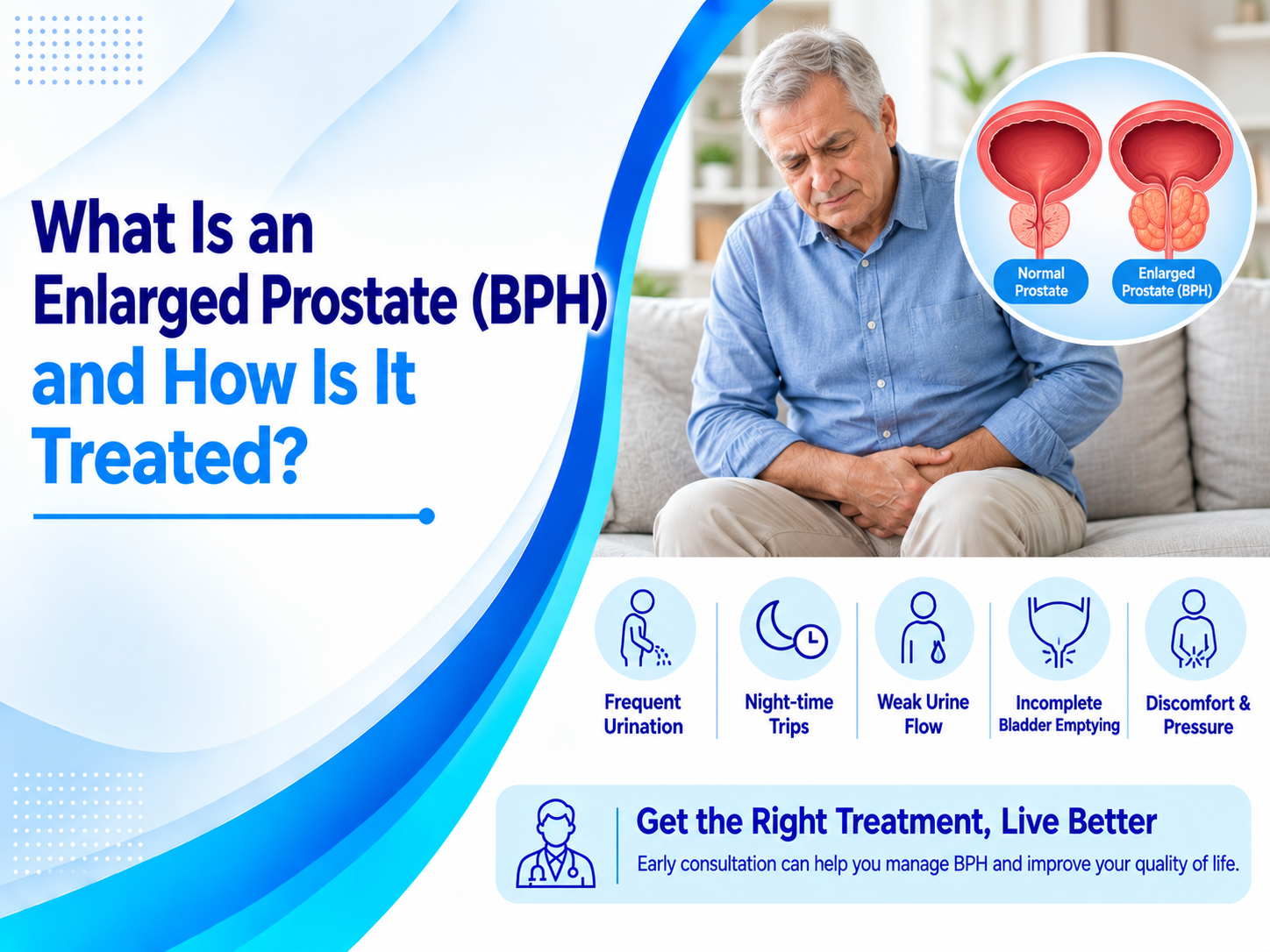
Urethral Stricture vs Enlarged Prostate: How Do the Symptoms Differ?
Both conditions cause a weak stream and incomplete emptying, which is why they are often confused. The table below shows how they differ.
| Feature | Urethral Stricture | Enlarged Prostate (BPH) |
| Usual age | Any adult age, including younger men | Mostly men over 50 |
| Common trigger | Injury, infection, catheter, surgery | Age-related hormonal changes |
| Main problem | Scar tissue narrows the tube | Prostate gland presses on the tube |
| Onset | Often slower, may follow an injury or procedure | Gradual with age |
Younger men with weak urine flow should particularly consider a stricture, since an enlarged prostate is less likely at their age.
What Causes a Urethral Stricture?
Anything that injures or inflames the urethra can lead to scarring. Common causes include:
- Injury: A fall, a blow to the groin or pelvis, or a pelvic fracture, sometimes with symptoms appearing years later
- Medical procedures: Repeated catheter use, prostate surgery, or scope procedures
- Infections: Urinary infections, urethral inflammation, and sexually transmitted infections
- Radiation treatment: Used for pelvic or prostate cancer
- Lichen sclerosus: A skin condition that can affect the genital area
- Unknown causes: A sizeable share of cases have no clear reason
Understanding the cause helps your doctor choose the most suitable treatment.
Who Is at Higher Risk?
Some people face a greater chance of developing a stricture. Risk is higher in men who have had:
- A previous urethral or pelvic injury
- Long-term or repeated catheter use
- Prostate surgery or radiation therapy
- Frequent urinary or sexually transmitted infections
- Previous urethral procedures
If you fall into any of these groups and notice changes in your urine flow, do not wait. Early evaluation makes treatment simpler.
Complications of an Untreated Urethral Stricture
Ignoring early symptoms can lead to serious problems:
- Sudden inability to pass urine (urinary retention), which is an emergency
- Repeated urinary infections
- Bladder stones from urine left behind
- Bladder damage from constant straining
- Kidney problems in long-standing, severe cases
- Pain and infection around the prostate
Seek urgent medical help if you cannot pass urine at all, or if you have severe lower belly pain with fever. Do not wait for the next appointment.
How Is a Urethral Stricture Diagnosed?
A urologist starts with your symptoms, medical history, and a physical exam. Tests may then be advised to find where the narrowing is and how long it is.
| Test | Purpose |
| Urine flow test | Measures the strength and speed of urine flow |
| Urine test | Checks for infection or blood |
| Ultrasound | Shows leftover urine and the length of the stricture |
| Retrograde urethrogram | X-ray with dye to show the location and length of narrowing |
| Cystoscopy | A thin camera tube used to look inside the urethra |
Accurate mapping of the stricture is important, since the right treatment depends on its length and position.
Treatment Options for Urethral Stricture
There are no medicines that cure a urethral stricture. Treatment focuses on widening or rebuilding the narrowed part. Options include:
- Dilation: Gradually stretching the narrowed urethra, sometimes with self-dilation for short strictures
- Endoscopic urethrotomy: A scope is used to cut or laser the scar tissue so urine can pass. Recurrence is possible
- Urethroplasty: Open surgery to remove the scarred section or rebuild the urethra, often with tissue from the body. It offers the lowest chance of the stricture returning
- Temporary catheter: Used in emergencies to drain the bladder before definitive treatment
The best urethral stricture treatment depends on how long the stricture is, where it sits, and whether earlier procedures have been tried. Consulting the best urologist in Kota helps ensure the plan suits your specific case.
Recovery and Follow-Up After Treatment
Recovery varies by procedure. Many people need a catheter for a short period after surgery, and your doctor will guide you on timing.
Follow-up visits and urine flow checks are important because strictures can return, especially after simpler procedures. Report any weakening of the stream early, since prompt action prevents the problem from becoming severe again.
Can You Prevent a Urethral Stricture?
Not every stricture can be prevented, but you can lower your risk by:
- Treating urinary and sexually transmitted infections promptly
- Using safe sex practices
- Avoiding unnecessary catheter use
- Protecting the groin and pelvis from injury
- Seeking early care for any change in urine flow
Why Choose Jain Surgical Hospital for Urology Care
Discussing urinary problems can feel uncomfortable. Jain Surgical Hospital provides a private, respectful setting where patients can speak openly and receive clear explanations.
As one of the best hospitals in Kota, the team focuses on accurate diagnosis, honest advice on all treatment options, and careful follow-up so you understand every step of your care.
Frequently Asked Questions
1. What is the first sign of a urethral stricture?
A weak or slow urine stream is usually the first sign. It may be followed by straining, a split stream, or a feeling that the bladder is not fully empty.
2. Can a urethral stricture go away on its own?
No. Scar tissue does not heal back to normal by itself, and the narrowing usually worsens over time without treatment.
3. Is a urethral stricture painful?
Not always. Many people feel more difficulty than pain, though burning, pelvic discomfort, or infection-related pain can occur as the condition progresses.
4. Can a urethral stricture come back after treatment?
Yes, especially after dilation or urethrotomy. Urethroplasty has the lowest recurrence rate, which is why it is often recommended for complex or repeated strictures.
5. When should I see a urologist about urinary symptoms?
See a urologist if your urine stream weakens, you strain to urinate, you get repeated infections, or you notice blood in the urine. If you cannot pass urine at all, seek emergency care.
Book Your Urology Consultation Today
A weak urine stream is not something to simply live with. Early diagnosis makes treatment simpler and protects your bladder and kidneys. Visit Jain Surgical Hospital, a trusted name for urology care in Kota, and consult an experienced urologist who can find the cause and guide your treatment. Book your appointment today and take the first step toward comfortable, normal urination.