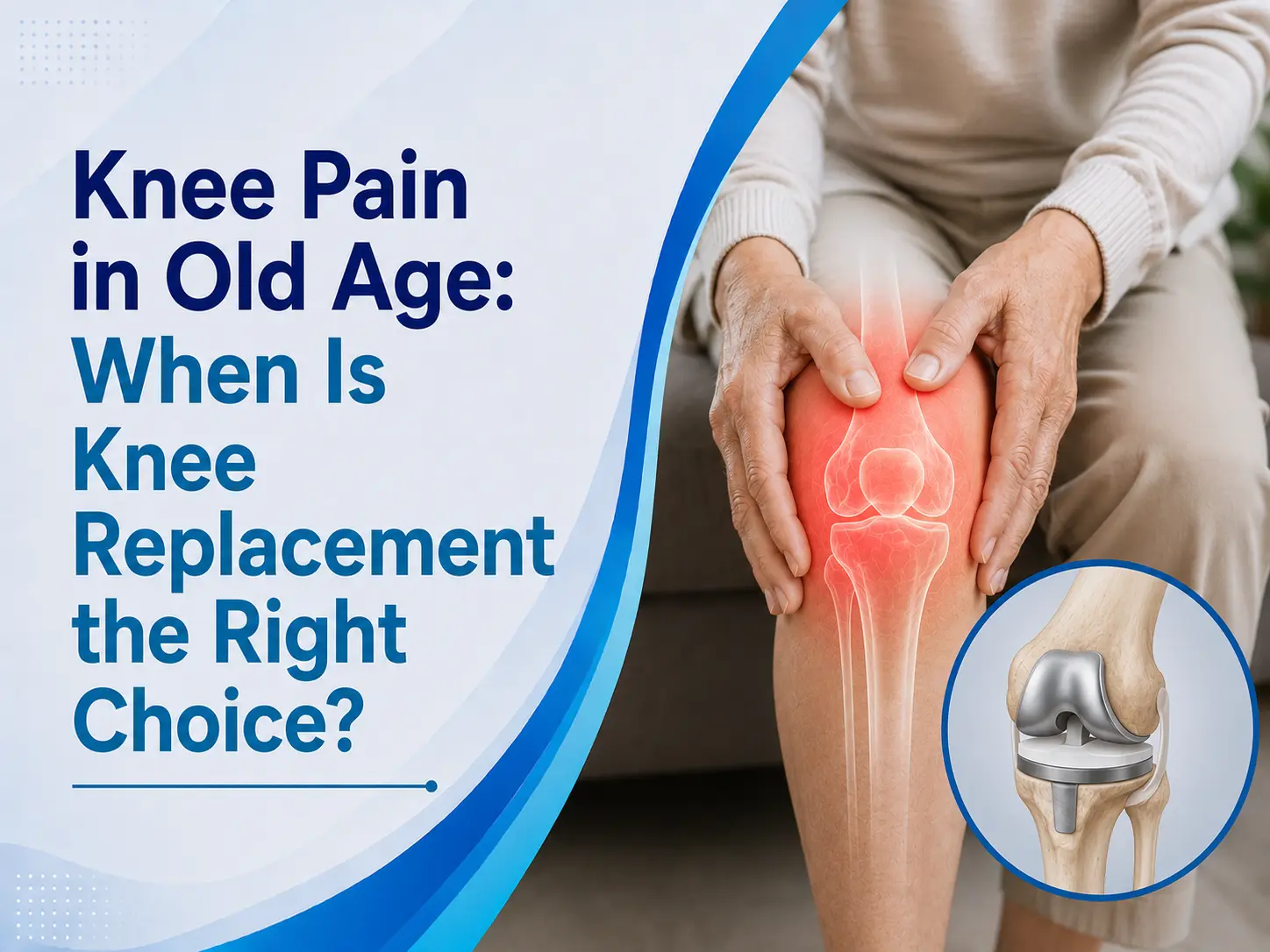

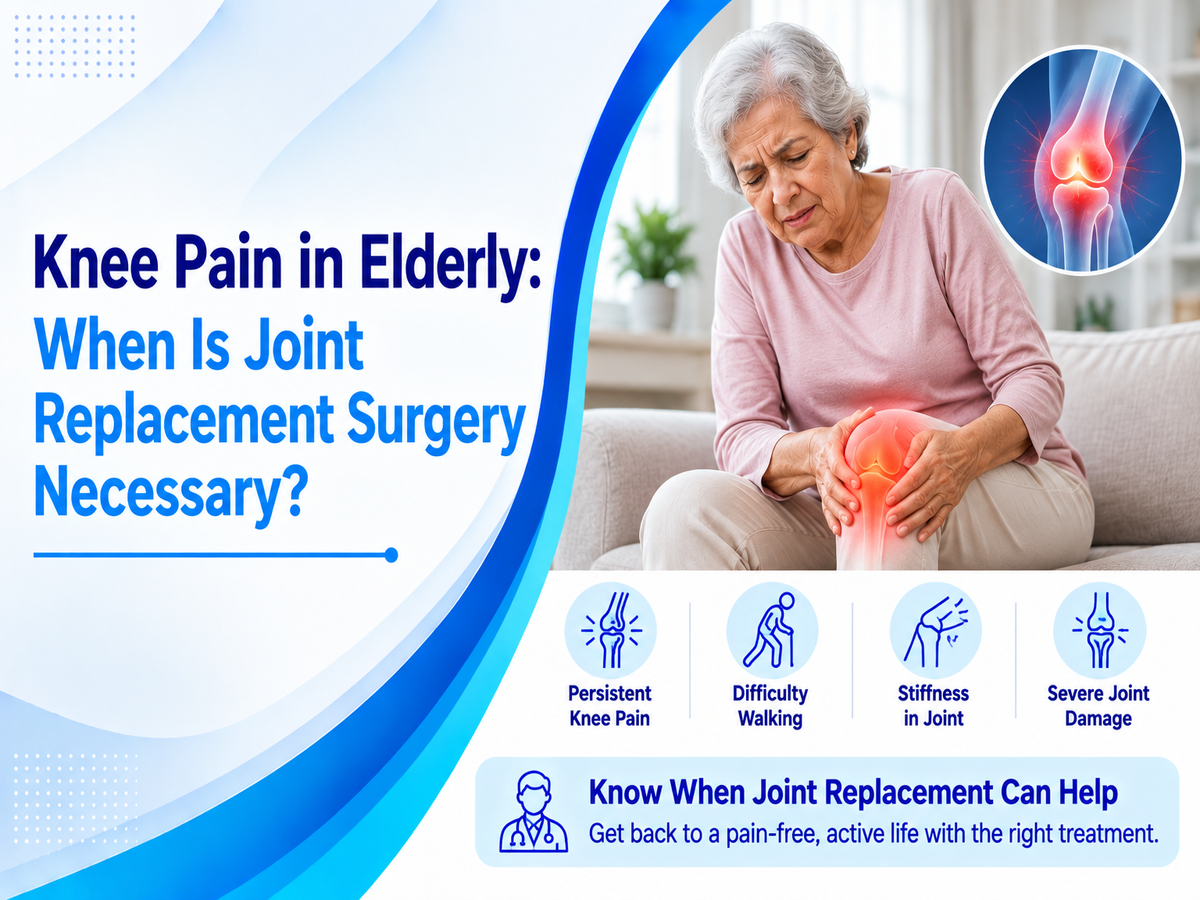
Knee Pain in Elderly individuals is one of the most common reasons for reduced mobility and independence after the age of 60. Nearly half of all people diagnosed with arthritis are 65 or older, making knee pain a leading concern for aging adults and their families.
The good news is that not every case of knee pain in elderly patients requires surgery. At Jain Surgical Hospital, a trusted multispeciality hospital in Kota, our orthopedic team helps patients understand exactly when conservative care is enough and when joint replacement becomes the right choice.
What Causes Knee Pain in Elderly Adults?
Understanding the root cause is the first step in managing knee pain in elderly patients effectively. While several conditions can contribute, one cause stands out as the most common.
- Osteoarthritis: The most frequent cause of knee pain in older adults, caused by gradual wear and breakdown of the cartilage that cushions the joint.
- Years of joint overuse: Decades of walking, standing, or physical activity naturally wear down knee cartilage over time.
- Obesity and excess weight: Extra body weight places significantly more pressure on the knee joints with every step.
- Previous injury or trauma: Old fractures, ligament tears, or sports injuries can accelerate joint degeneration later in life.
- Genetic predisposition: A family history of arthritis increases the likelihood of developing knee problems with age.
- Muscle weakness: Reduced muscle strength around the knee, common with aging, provides less support and stability to the joint.
Osteoarthritis develops when the protective cartilage between bones gradually wears away, eventually leading to bone rubbing against bone, which causes pain, stiffness, and swelling.
Common Symptoms of Knee Pain in Elderly Patients
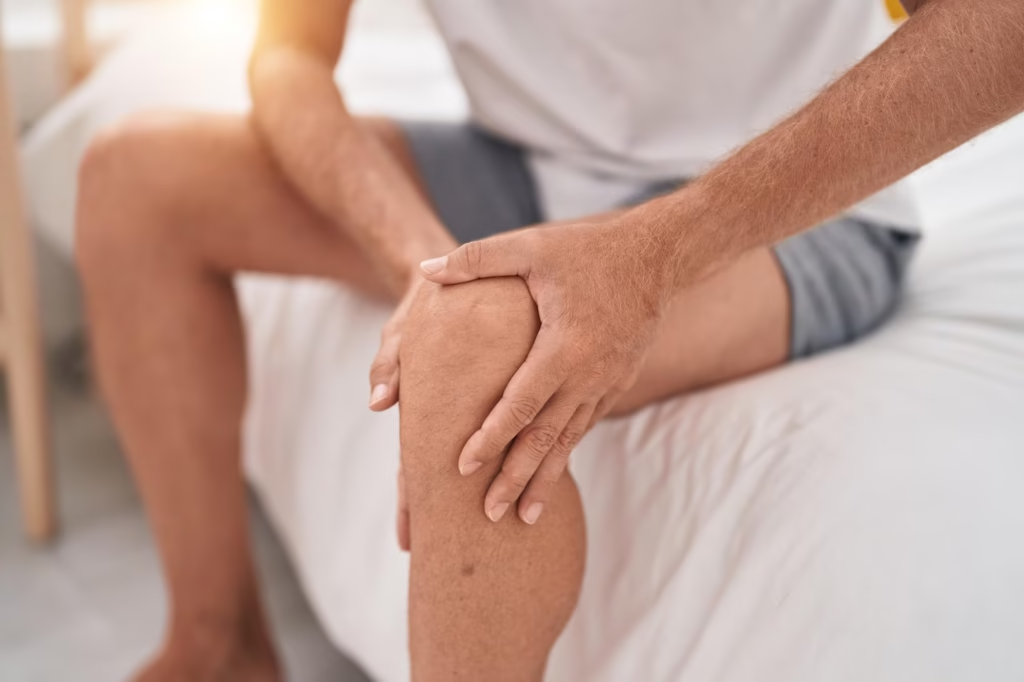
Recognising the pattern and severity of symptoms helps determine how far the condition has progressed. Typical symptoms include:
- Pain during weight-bearing activities like walking or climbing stairs
- Stiffness, particularly after sitting or first thing in the morning
- Swelling or a feeling of warmth around the knee joint
- A grinding or clicking sensation during movement
- Reduced range of motion in the knee
- Pain that worsens with activity and improves with rest, in early stages
For many patients, symptoms develop gradually over months or years, though in some cases pain can appear and worsen relatively quickly.
Non-Surgical Treatment Options for Knee Pain in Elderly Patients
Doctors generally recommend starting with conservative treatment for knee pain in elderly patients before considering surgery. Many people manage their symptoms successfully without ever needing an operation.
- Physical therapy: Strengthening the muscles around the knee can improve stability and reduce pain significantly.
- Weight management: Even a modest reduction in body weight can meaningfully ease pressure on the knee joint.
- Pain relief medication: Anti-inflammatory medications can help manage pain and swelling during flare-ups.
- Assistive devices: Canes, knee braces, or walkers can reduce strain on the joint during daily activities.
- Activity modification: Switching to lower-impact activities like swimming or cycling can ease pressure while keeping the joint active.
- Injections: Corticosteroid or lubricating injections can offer temporary relief for moderate osteoarthritis symptoms.
These options work well for many patients, particularly in the earlier stages of osteoarthritis, and can delay or sometimes eliminate the need for surgery altogether.
When Is Joint Replacement Surgery Necessary for Knee Pain in Elderly Patients?
This is the central question most patients and families want answered. According to leading orthopedic guidance, knee replacement becomes appropriate when non-surgical treatments have been tried and are no longer providing enough relief, and when pain begins to limit daily activities and quality of life.
Signs that indicate it may be time to consider knee replacement include:
- Persistent pain that continues even at rest or interrupts sleep
- Significant difficulty walking, climbing stairs, or getting up from a chair
- Pain that no longer responds to medication, injections, or physical therapy
- Visible joint deformity or a noticeable change in leg alignment
- Reduced independence in daily activities like bathing, dressing, or shopping
- X-rays confirming advanced cartilage loss along with matching clinical symptoms
Importantly, X-ray findings alone do not automatically mean surgery is needed. Some patients with significant cartilage wear on imaging have only mild symptoms, while others with moderate changes experience severe pain. The decision is based on how much the condition affects your actual daily life, not imaging results alone.
What to Expect From Knee Replacement Surgery
Knee replacement, also called knee arthroplasty, involves removing damaged bone and cartilage from the joint and replacing it with an artificial implant made of metal alloys and medical-grade plastic. It is considered one of the most successful and reliable procedures in modern orthopedic medicine.
What the procedure typically involves:
- A thorough pre-surgical evaluation to confirm you are a suitable candidate
- Removal of damaged cartilage and bone from the femur, tibia, and sometimes the kneecap
- Placement of an artificial joint designed to restore smooth, pain-free movement
- A structured recovery period including physical therapy to rebuild strength and mobility
Most patients experience significant pain relief and improved function after surgery, with studies showing satisfaction rates around 80 percent among those who undergo the procedure.
As a leading orthopedic hospital in Kota, our goal is to help elderly patients regain mobility, independence, and a pain-free quality of life.
Is Knee Replacement Safe for Older Patients?
Age alone is not a barrier to knee replacement surgery, and many patients in their 70s and 80s undergo the procedure successfully. That said, your orthopedic doctor will carefully evaluate overall health, existing medical conditions, and fitness for surgery before recommending it.
Risks and recovery time can vary based on age and general health, which is why a thorough pre-operative assessment matters. At Jain Surgical Hospital, our orthopedic team works closely with anesthesiologists and physicians to ensure elderly patients are properly prepared for a safe procedure and smooth recovery.
Why Choose Jain Surgical Hospital for Knee Pain in Elderly Patients
Jain Surgical Hospital is recognised as one of the best hospitals in Kota for orthopedic care, offering comprehensive treatment for knee pain at every stage, from early management to joint replacement.
- Experienced orthopedic doctor in Kota: Our surgical team has extensive experience treating knee osteoarthritis and performing joint replacement surgery in elderly patients.
- Complete non-surgical care: We offer physical therapy, pain management, and injection-based treatments before recommending surgery.
- Advanced surgical technology: Our team uses modern implant technology and surgical techniques to support faster recovery and better outcomes.
- Comprehensive multispeciality support: As a full multispeciality hospital in Kota, we coordinate closely with anesthesia and internal medicine teams to ensure safe surgery for elderly patients.
- Personalised treatment plans: We assess each patient’s pain level, lifestyle, and overall health before recommending the right course of action.
Frequently Asked Questions
1. At what age is knee replacement usually recommended?
There is no fixed age requirement for knee replacement, though it is most common in patients over 60. The decision depends on symptom severity and how much the condition affects daily life, not age alone.
2. How long does recovery take after knee replacement surgery?
Most patients begin walking with support within a day or two after surgery, with full recovery typically taking three to six months. Physical therapy plays a major role in regaining strength and mobility during this period.
3. Can knee pain in elderly patients be managed without surgery long term?
Yes, many patients manage knee osteoarthritis for years using physical therapy, weight management, and medication. Surgery becomes necessary only when these methods no longer provide adequate relief.
4. Is knee replacement surgery painful?
Modern pain management techniques significantly reduce discomfort during and after surgery. Most patients report substantial pain relief within weeks compared to their pre-surgery condition.
5. How do I know if I need one knee or both knees replaced?
This depends on which joint or joints show significant symptoms and structural damage on evaluation. Your orthopedic doctor will assess both knees individually, since it is common for only one knee to require surgery even if both show some wear.
Conclusion
Knee Pain in Elderly patients is often caused by osteoarthritis and can frequently be managed with non-surgical treatments like physical therapy, weight management, and medication. Joint replacement becomes necessary when pain persists despite these measures and begins to significantly limit daily activities and quality of life.
If knee pain is affecting your mobility or independence, do not wait until the condition worsens further. Book a consultation with the orthopedic specialists at Jain Surgical Hospital, the trusted multispeciality hospital in Kota, to find the right treatment path for you.