
Piles vs Fissure vs Fistula is one of the most common questions patients ask when they experience pain, bleeding, or discomfort in the anal area. All three conditions affect the same region and share a few overlapping symptoms, but they are medically very different problems with different causes and treatments.
At Jain Surgical Hospital, a leading multispeciality hospital in Kota, our colorectal surgeons frequently see patients who have self-diagnosed the wrong condition and delayed proper care.
What Are Piles, Fissures, and Fistulas?
Before comparing piles vs fissure vs fistula, it helps to understand each condition on its own.
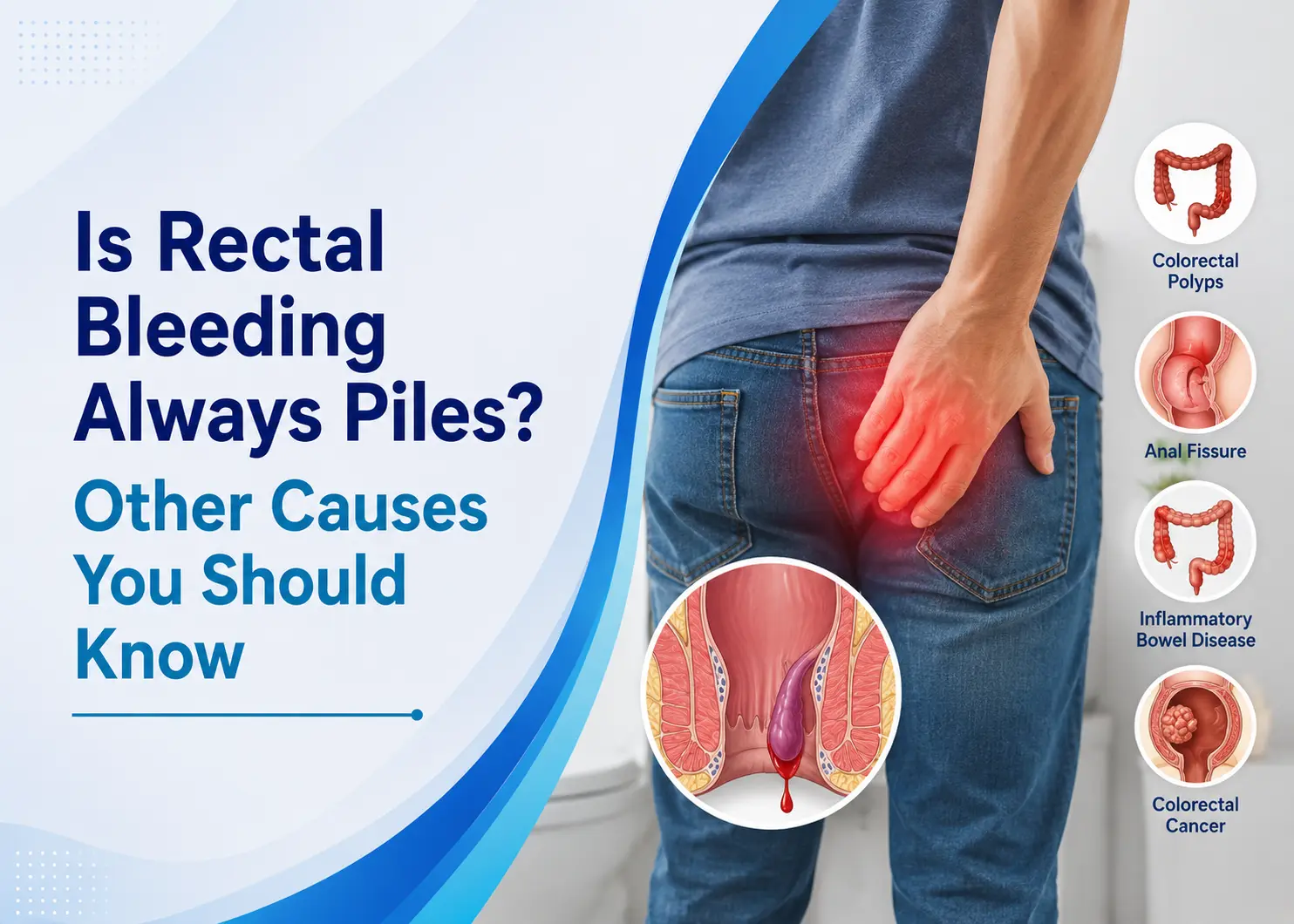
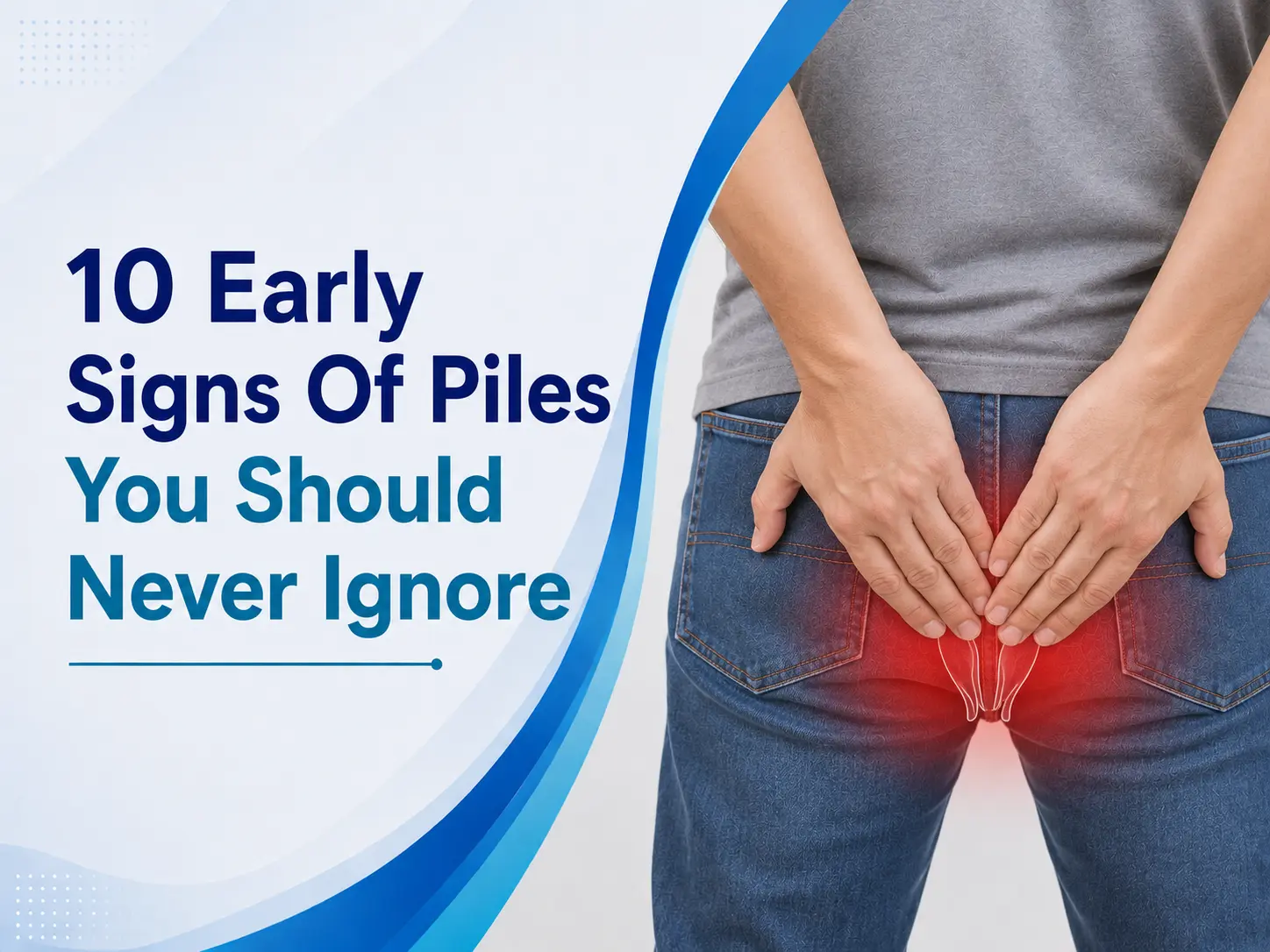
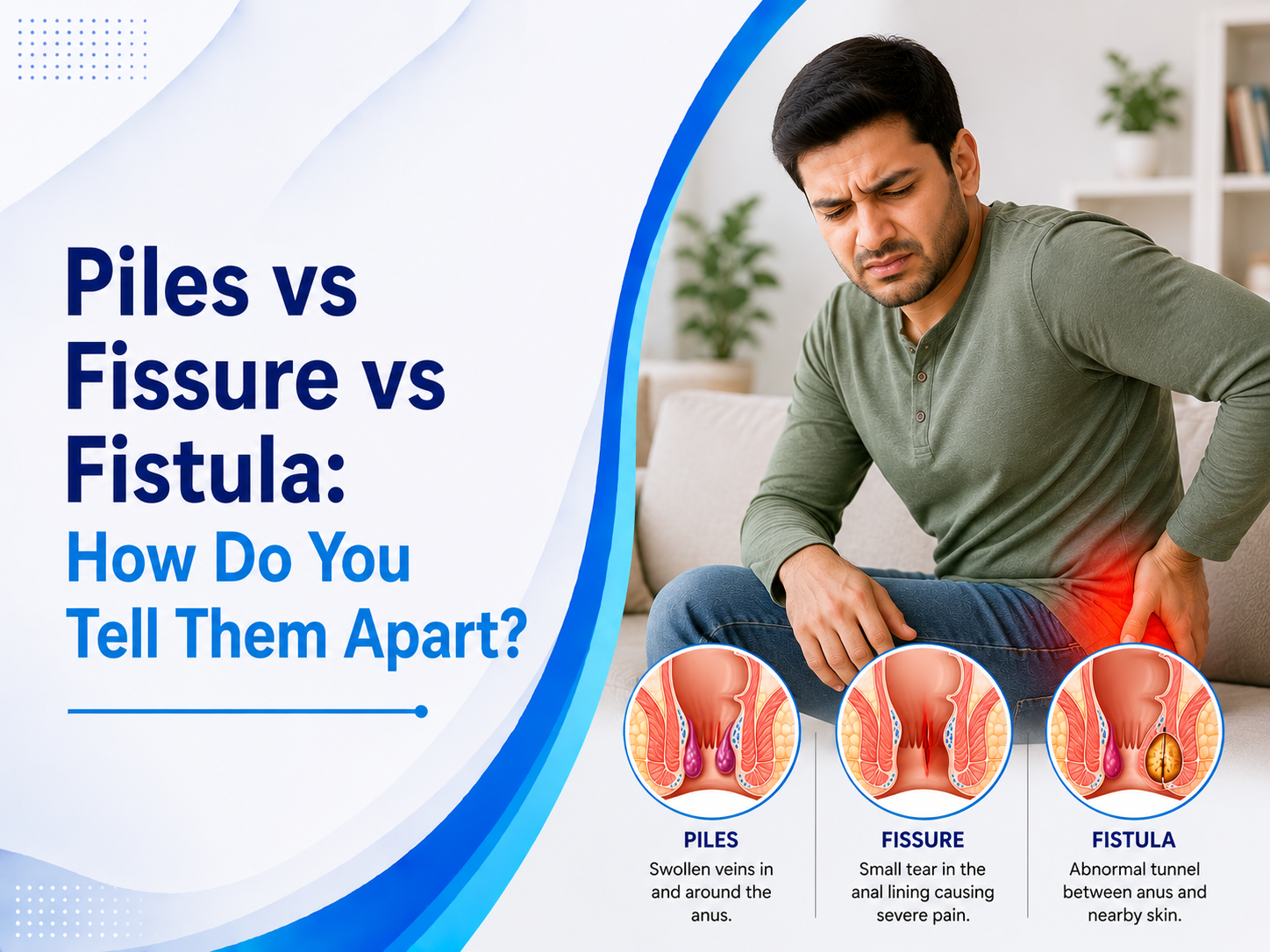
Piles, also called hemorrhoids, are swollen blood vessels inside or around the anus. They form when there is too much pressure on the veins in the lower rectum, often from straining, constipation, or sitting for long periods.
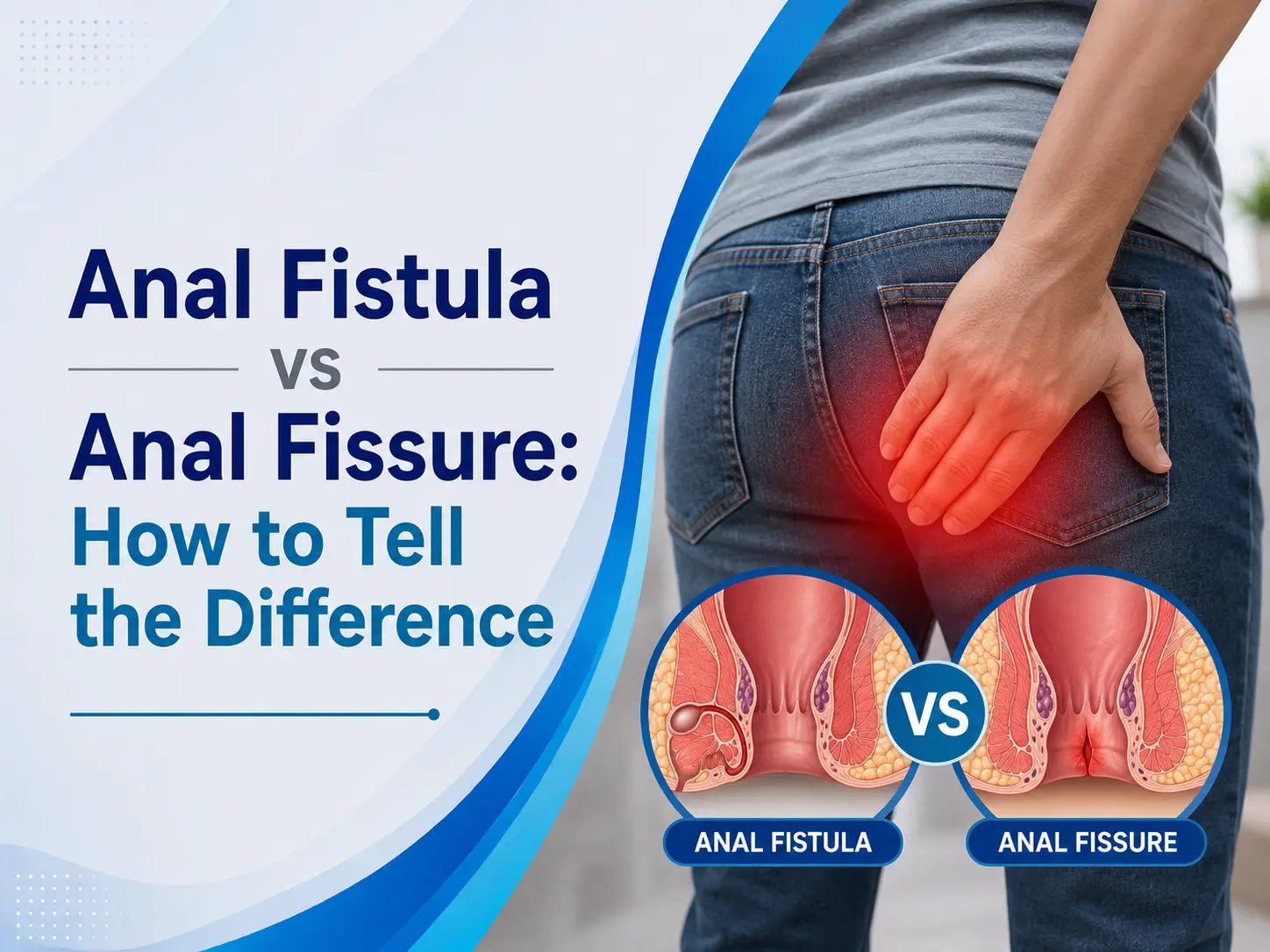
Fissures are small tears or cuts in the delicate lining of the anal canal. They usually occur when hard or large stools stretch the tissue beyond its limit during a bowel movement.
Fistulas are abnormal tunnels that form between the inside of the anal canal and the skin outside. They typically develop after an anal abscess, a pocket of infection, bursts or is drained incompletely.
Piles vs Fissure vs Fistula: Key Symptom Differences
Telling piles vs fissure vs fistula apart starts with paying attention to your specific symptoms. Each condition tends to present in a distinct way.
Symptoms of piles:
- Painless bleeding during bowel movements in early stages
- A soft lump or swelling near the anus
- Itching or mucus discharge
- Pain only if the piles become swollen, thrombosed, or prolapsed
Symptoms of anal fissure:
- Sharp, cutting pain during and after passing stool
- Bright red blood on toilet paper or in the stool
- A visible crack or tear at the anal opening
- Spasm or tightness in the anal muscle
Symptoms of anal fistula:
- Persistent pain that continues even when not passing stool
- Pus, blood, or foul-smelling discharge from an opening near the anus
- Fever, swelling, or a feeling of being generally unwell
- Skin irritation from constant drainage
If you notice constant discharge and fever alongside pain, this points toward a fistula rather than piles or a fissure. Persistent sharp pain with fresh bleeding usually signals a fissure.
What Causes Piles, Fissures, and Fistulas?
Understanding the root cause is central to comparing piles vs fissure vs fistula, since the triggers for each condition are quite different.
| Condition | Primary Cause |
| Piles | Chronic constipation, straining, pregnancy, obesity, prolonged sitting |
| Fissure | Hard stools, chronic diarrhea, childbirth, anal trauma |
| Fistula | Anal abscess, Crohn’s disease, tuberculosis, prior anal surgery |
Piles develop gradually from repeated pressure on the rectal veins. Fissures usually appear suddenly after a single episode of straining or passing a hard stool. Fistulas almost always start as an infection that was not fully treated.
How Doctors Diagnose Piles, Fissures, and Fistulas
A correct diagnosis is essential before starting any treatment, since the management for piles vs fissure vs fistula is completely different. At Jain Surgical Hospital, diagnosis typically involves the following steps.
- Physical examination: A visual check and a digital rectal exam to identify swelling, tears, or openings.
- Proctoscopy or anoscopy: A small scope is used to examine the anal canal and lower rectum closely.
- Fistulography or MRI: Imaging tests help map the exact path of a fistula tract before surgery.
- Medical history review: Questions about bowel habits, prior infections, and conditions like Crohn’s disease guide the diagnosis.
Self-diagnosing based on symptoms alone can lead to the wrong treatment plan, so a proper clinical evaluation is always recommended.
Piles vs Fissure vs Fistula: Treatment Options Compared
Once the correct diagnosis is confirmed, treatment plans differ significantly across all three conditions.
Piles treatment in Kota usually starts conservatively and moves to procedures only if needed:
- High-fiber diet and increased water intake
- Stool softeners and topical creams
- Minimally invasive options like banding, sclerotherapy, or laser hemorrhoidectomy
- Traditional hemorrhoidectomy for advanced or prolapsed piles
Fissure treatment in Kota focuses on relaxing the anal muscle to allow healing:
- Fiber supplements and warm sitz baths
- Topical ointments to relax the anal sphincter
- Lateral sphincterotomy for chronic fissures that do not heal with medication
Fistula treatment in Kota almost always requires a procedural approach, since fistulas rarely heal on their own:
- Fistulotomy, where the tunnel is opened and allowed to heal flat
- Seton placement for complex tracts near the sphincter muscle
- Laser fistula treatment (LAFT) for a less invasive, muscle-sparing option
- Advancement flap procedures for fistulas involving deeper tissue
The right treatment always depends on the size, location, and severity of the condition, which is why an accurate diagnosis matters more than guessing based on symptoms alone.
When Should You See a Doctor?
Many patients delay seeking help because these conditions feel embarrassing to discuss. However, waiting can allow a simple fissure to become chronic or a small fistula to become more complex.
You should book a consultation if you notice:
- Bleeding that lasts more than a few days
- Pain that does not improve with home care
- Any discharge of pus or a foul smell near the anus
- Fever along with anal pain or swelling
- A lump that continues to grow or does not go back in on its own
Why Choose Jain Surgical Hospital for Piles, Fissure, and Fistula Treatment in Kota
Jain Surgical Hospital is known as one of the best hospitals in Kota for anorectal and colorectal care. Patients across the region trust us for accurate diagnosis and modern treatment of piles, fissures, and fistulas.
- Experienced specialists: Our surgeons have years of hands-on experience managing all three conditions, from mild to complex cases.
- Advanced diagnostics: We use proctoscopy, MRI, and fistulography to confirm diagnosis before recommending treatment.
- Minimally invasive technology: Laser-based options for piles and fistula treatment mean less pain and faster recovery for eligible patients.
- Comprehensive multispeciality care: As a full multispeciality hospital in Kota, we support your treatment with anesthesia, diagnostics, and post-procedure follow-up under one roof.
- Confidential, patient-first approach: We understand these conditions are sensitive, and our team ensures a comfortable, respectful consultation experience.
Whether you need piles treatment in Kota, fissure treatment in Kota, or fistula treatment in Kota, our team is equipped to diagnose the exact condition and guide you toward the most suitable, least invasive option available.
Frequently Asked Questions
1. Can piles turn into a fistula if left untreated?
Piles and fistulas develop through different processes, so piles do not directly turn into a fistula. However, ignoring any anorectal condition increases the risk of infection and complications, so timely treatment is always recommended.
2. Is it possible to have piles, a fissure, and a fistula at the same time?
Yes, it is possible, especially in patients with chronic constipation or straining habits. This is another reason a proper clinical examination is important rather than relying on symptoms alone.
3. Which condition causes the most pain: piles, fissure, or fistula?
Anal fissures are generally considered the most immediately painful, especially during bowel movements, due to muscle spasm around the tear. Fistulas often cause more constant, ongoing discomfort along with discharge.
4. Can piles, fissures, or fistulas be treated without surgery?
Early-stage piles and fissures often respond well to diet changes, medication, and lifestyle adjustments. Fistulas, however, usually require some form of procedural or surgical treatment since they rarely close on their own.
5. How long does recovery take after fissure or fistula treatment?
Recovery after lateral sphincterotomy for a fissure typically takes one to two weeks. Recovery after fistula treatment varies from two to six weeks depending on the technique used and the complexity of the tract.
Conclusion
Understanding piles vs fissure vs fistula comes down to recognising the pattern of your symptoms: painless bleeding usually points to piles, sharp cutting pain suggests a fissure, and persistent discharge with fever indicates a fistula. Each condition has distinct causes and requires a different treatment approach, which makes accurate diagnosis the most important first step.
If you are experiencing anal pain, bleeding, or discharge and are unsure which condition you have, do not self-diagnose or delay care. Book a consultation with the expert team at Jain Surgical Hospital, the trusted multispeciality hospital in Kota, for accurate diagnosis and the right treatment plan. Call us today and schedule your appointment and get lasting relief.