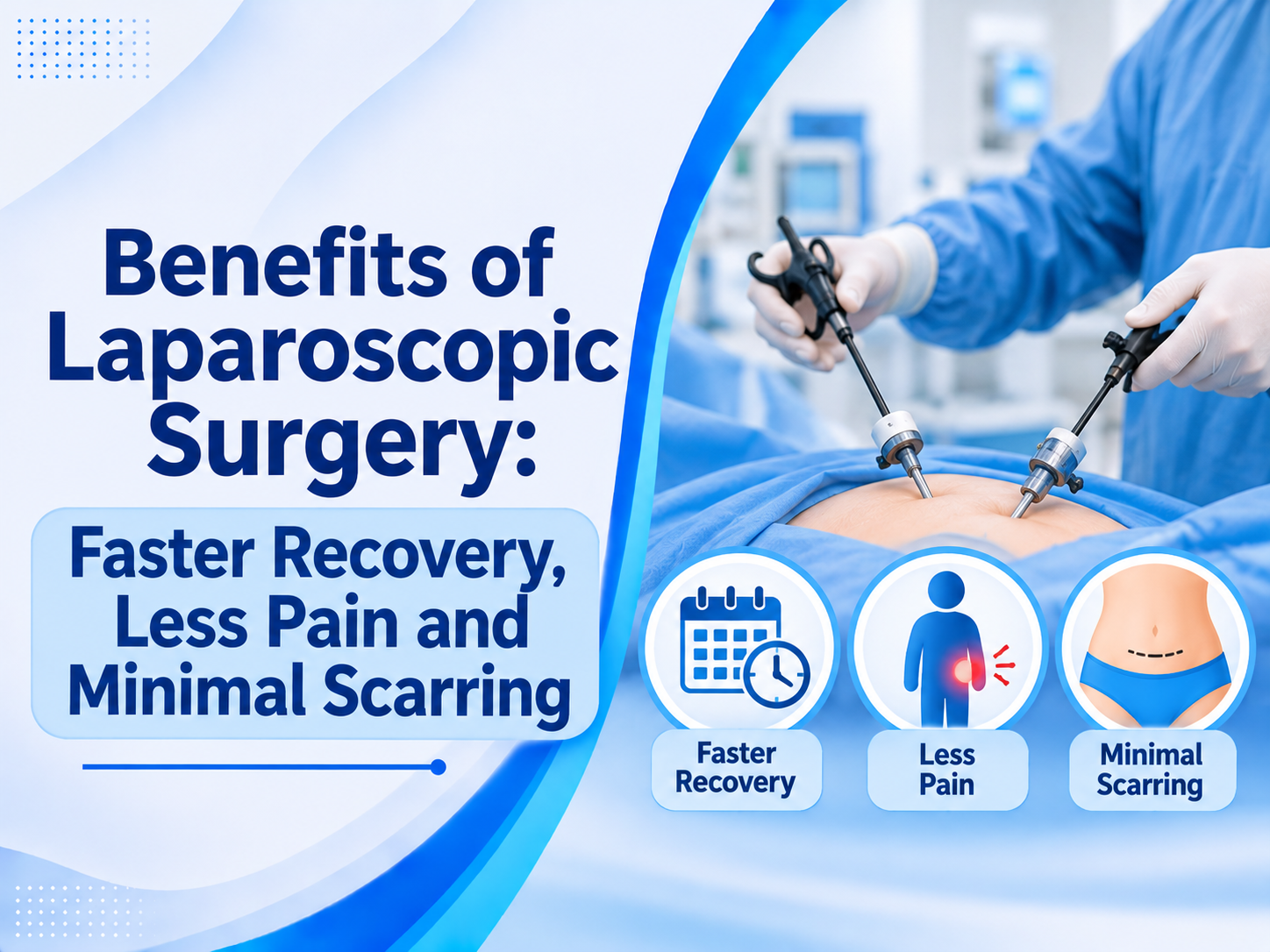
The main benefits of laparoscopic surgery are less pain, faster recovery, a shorter hospital stay, smaller scars, and a lower risk of infection compared with open surgery. This is because the surgeon works through a few tiny cuts instead of one large incision, causing less damage to the body. Many patients go home within a day or two and return to daily life sooner. At Jain Surgical Hospital, a trusted hospital in Kota, patients get clear guidance on when keyhole surgery is the right choice. This guide explains the benefits, limits, and what to expect.
What Is Laparoscopic Surgery?
Laparoscopic surgery, also called keyhole or minimally invasive surgery, is done through small cuts, usually about 0.5 to 1 centimetre long. A thin tube with a tiny camera is inserted, and the picture appears on a screen.
The surgeon uses long, slim instruments to perform the operation while watching the screen. Gas is gently used to expand the abdomen so there is room to work.
It treats the same problems as open surgery, but with far less disruption to the body.
Benefit 1: Less Pain After Surgery
Smaller incisions mean less cutting of muscle and tissue. As a result, most patients feel less pain after the operation than they would after open surgery.
Less pain also means less need for strong painkillers. Patients can usually start moving, eating, and walking sooner, which supports healing.
Some people feel mild shoulder discomfort for a day or two. This comes from the gas used during surgery and usually fades quickly.
Benefit 2: Faster Recovery and Shorter Hospital Stay
Recovery is one of the biggest benefits of laparoscopic surgery. Because the body suffers less trauma, healing is generally quicker.
Many patients are discharged within 24 to 48 hours, and some procedures can even be done as day surgery. Open surgery often needs a longer hospital stay, followed by weeks of rest.
Returning to work and family life sooner is especially valuable for people with jobs, children, or elderly relatives to care for.
Benefit 3: Minimal Scarring
Laparoscopic cuts are tiny, so scars are small and fade over time. Open surgery usually leaves a longer, more visible scar.
For many people, especially younger patients, better cosmetic results bring added confidence. Single-incision techniques can hide the scar in the belly button for suitable cases.
Good scar care and following your surgeon’s advice help scars heal even better.
Benefit 4: Lower Risk of Infection and Hernia
Smaller wounds mean less exposure of internal tissues to bacteria. This lowers the chance of wound infection.
Large incisions can also weaken the abdominal wall and increase the risk of an incisional hernia later. Small cuts reduce this risk.
Lower infection risk may also mean fewer antibiotics and fewer follow-up problems.
Benefit 5: Less Blood Loss
Laparoscopy generally involves less bleeding than open surgery. The camera gives a magnified, clear view, which helps the surgeon control small blood vessels carefully.
Lower blood loss can mean a lower need for blood transfusion and a smoother recovery.
Benefit 6: Better View and Precision
The camera magnifies the area being treated, giving surgeons a detailed view of organs and tissues. This can help them work precisely and protect nearby structures.
Modern laparoscopic equipment may include high-definition screens and specialised instruments for greater accuracy.
Laparoscopic Surgery vs Open Surgery: A Quick Comparison
| Feature | Laparoscopic Surgery | Open Surgery |
| Incision size | Several tiny cuts | One larger cut |
| Pain after surgery | Usually less | Usually more |
| Hospital stay | Often 1 to 2 days | Often several days |
| Scarring | Small, less visible | Larger, more visible |
| Infection risk | Lower | Higher |
| Blood loss | Usually less | Usually more |
| Return to activities | Often sooner | Often slower |
Individual results vary based on the condition, your health, and the surgeon’s experience.
Conditions Often Treated With Laparoscopic Surgery
Keyhole methods are used across many specialties. Common examples include:
- General surgery: Gallbladder stones, appendicitis, and hernia repair
- Gynecology: Fibroids, ovarian cysts, endometriosis, and hysterectomy
- Urology: Some kidney and ureter conditions
- Digestive surgery: Acid reflux and certain bowel problems
- Weight-loss surgery: Bariatric procedures
A laparoscopic doctor in Kota can examine you and explain whether this approach is safe for your condition.
Is Laparoscopic Surgery Right for Everyone?
Laparoscopic surgery is very beneficial, but it is not always the best choice. Open surgery may be safer in some situations:
- Very large or complex growths
- Severe infection or emergency conditions
- Extensive scar tissue from previous surgeries
- Certain heart or lung conditions that make gas inflation risky
- Cases where the surgeon cannot get a clear view
Sometimes the surgeon starts laparoscopically and switches to open surgery for safety. This is a safety decision, not a failure.
Risks You Should Know About
No operation is risk-free, and laparoscopic surgery is no exception. Possible risks include:
- Bleeding or infection
- Injury to nearby organs or blood vessels
- Reaction to anesthesia
- Temporary shoulder or abdominal discomfort
- Rarely, conversion to open surgery
These risks are low when the operation is done by an experienced team. Always discuss them with your surgeon before surgery.
Recovery Timeline After Laparoscopic Surgery
Recovery varies by procedure, but here is a general idea:
- Same day to 2 days: Rest in hospital, start walking, and resume light food
- First week: Gentle movement, wound care, and prescribed medicines
- 1 to 2 weeks: Return to light work for many patients
- 2 to 4 weeks: Gradual return to normal activities, depending on the surgery
- 4 to 6 weeks: Heavy lifting and strenuous exercise, as your surgeon allows
Your surgeon will give personalised advice, since each patient and procedure is different.
Tips for a Smoother Recovery
You can support healing with these habits:
- Walk short distances daily, as advised
- Follow your diet and medicine instructions
- Keep wounds clean and dry
- Avoid heavy lifting until cleared
- Drink enough water and eat fiber-rich foods
- Attend all follow-up visits
- Call your doctor for fever, increasing pain, redness, or vomiting
How to Choose the Right Hospital and Surgeon
Experience matters as much as equipment. When searching for a laparoscopic surgery hospital in Kota, consider asking:
- How many laparoscopic procedures does the team perform?
- Which approach is best for my condition and why?
- What are my risks and expected recovery time?
- What follow-up support will I receive?
The best hospital for laparoscopy will answer these questions openly and never rush your decision.
Why Choose Jain Surgical Hospital for Minimally Invasive Surgery
Jain Surgical Hospital focuses on safe, patient-centred surgical care. The team takes time to explain your diagnosis, discuss all your options, and recommend the approach that suits your health.
For patients seeking laparoscopic surgery in Kota, the hospital offers a supportive environment from consultation to follow-up. As one of the best hospitals in Kota, it aims to make surgery less stressful and recovery smoother.
Frequently Asked Questions
1. What are the main benefits of laparoscopic surgery?
The main benefits are less pain, faster recovery, smaller scars, a shorter hospital stay, and a lower risk of infection compared with open surgery.
2. How long does it take to recover from laparoscopic surgery?
Many patients return to light activity within one to two weeks, but full recovery depends on the procedure and your health. Your surgeon will guide you.
3. Is laparoscopic surgery as safe as open surgery?
For many conditions, yes. It is widely used and generally safe in experienced hands. The safest approach depends on your diagnosis and overall health.
4. Will I have scars after laparoscopic surgery?
Yes, but they are small and usually fade over time. Open surgery leaves a longer, more visible scar.
5. Can every surgery be done laparoscopically?
No. Some complex, emergency, or heavily scarred cases may need open surgery. Your surgeon will decide after examining you.
Book Your Surgical Consultation Today
If you have been advised surgery, you deserve to know all your options. A short consultation can help you understand whether keyhole surgery is right for you. Visit Jain Surgical Hospital, a trusted name for laparoscopic care in Kota, and consult an experienced surgeon who will explain every step clearly. Book your appointment today and take the first step toward a safer, smoother recovery.