Piles Problem During and After Pregnancy: Symptoms, Causes & Relief
Piles Problem During and After Pregnancy is far more common than most expecting and new mothers realise. Studies show that between 25 and 40 percent of pregnant women experience some degree of hemorrhoidal swelling, especially in the third trimester and in the weeks following delivery.
What Is the Piles Problem During and After Pregnancy?
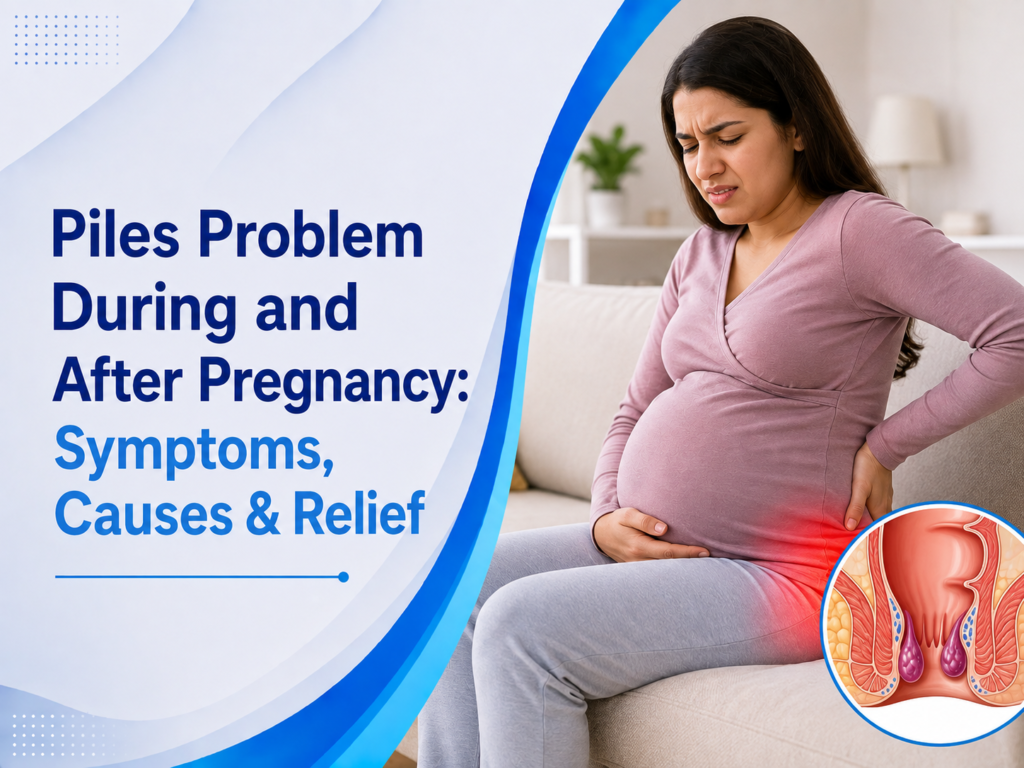
Piles, also known as hemorrhoids, are swollen veins located in and around the anus and lower rectum. The piles problem during and after pregnancy happens because your growing uterus and hormonal changes place extra pressure on these veins.
During pregnancy, the expanding uterus presses on the pelvic veins and slows blood return from the lower body. After delivery, the strain of pushing during labour can further swell these veins, which is why many women notice piles for the first time in the days right after childbirth.
The condition is usually temporary and improves within a few weeks after delivery. However, without proper care, it can cause significant discomfort and, in some cases, become a longer-term problem.
What Causes Piles Problem During and After Pregnancy?
Several physical changes during pregnancy work together to increase the risk of piles. Understanding these causes can help you take preventive steps early.
- Pressure from the growing uterus: As the baby grows, the uterus presses on the pelvic veins and the large vein on the right side of the body, slowing blood flow and causing veins to swell.
- Hormonal changes: Rising progesterone levels relax the walls of blood vessels, making them more prone to swelling, while also slowing digestion.
- Constipation: Slower bowel movement during pregnancy often leads to straining, which directly increases pressure on rectal veins.
- Weight gain: Extra body weight adds overall pressure on the pelvic and rectal area.
- Prolonged pushing during labour: Pushing for more than 20 minutes during delivery is strongly linked to postpartum hemorrhoids.
- Sitting or standing for long periods: Reduced movement during late pregnancy or early recovery can worsen blood pooling in the rectal veins.
Common Symptoms to Watch For
Recognising the symptoms early makes it easier to manage the piles problem during and after pregnancy before it becomes severe. Common signs include:
- Itching or irritation around the anus
- Pain or discomfort, especially while sitting or during bowel movements
- Bright red bleeding during or after passing stool
- A soft swelling or lump near the anal opening
- A feeling of fullness or incomplete bowel emptying
Most cases are mild and improve with home care. However, symptoms such as heavy bleeding, severe pain, or a lump that will not go back in on its own need prompt medical attention.
Is Piles Problem During Pregnancy Dangerous for the Baby?
This is one of the most common worries among expecting mothers, and the answer is reassuring. Piles are a local condition affecting the veins around the anus and do not directly affect the baby’s growth or health.
That said, untreated piles can cause significant pain and stress for the mother, and severe straining from constipation is best avoided during pregnancy. Managing the condition early supports the mother’s comfort and overall wellbeing throughout pregnancy and recovery.
Safe Relief Options for Piles Problem During and After Pregnancy
Treating piles during pregnancy requires extra caution, since not every medication is safe for the mother or baby. The good news is that most cases respond well to simple, safe measures.
Diet and lifestyle changes:
- Increase fibre intake through fruits, vegetables, and whole grains
- Drink plenty of water throughout the day
- Avoid straining during bowel movements
- Take short walks and avoid sitting for long, unbroken periods
Home remedies for comfort:
- Warm water soaks, also called sitz baths, several times a day
- Cold compresses to reduce swelling and discomfort
- Using a soft cushion or donut-shaped pillow while sitting
- Keeping the area clean and gently patting dry rather than rubbing
Doctor-guided treatment options:
- Stool softeners, which are generally considered safe during and after pregnancy
- Pregnancy-safe hemorrhoid creams or suppositories recommended by your doctor
- Witch hazel pads to soothe irritation and reduce swelling
- Pain relief options that are safe during breastfeeding, if needed after delivery
Always consult a doctor before starting any new medication or cream during pregnancy or while breastfeeding. What works well for a non-pregnant patient may not be appropriate during this stage.
When Does Piles Problem During and After Pregnancy Need Medical Treatment?
Most cases of piles linked to pregnancy improve on their own within a few weeks after delivery. However, medical evaluation becomes necessary in certain situations.
- Bleeding that is heavy or does not improve with home care
- Severe, persistent pain that affects daily activity
- A hemorrhoid that has become hard, purple, or very swollen, known as a thrombosed hemorrhoid
- Symptoms that continue for several weeks after delivery without improvement
- Signs of infection, such as fever or spreading redness
In most cases, doctors avoid surgical treatment for piles during pregnancy and prefer to manage symptoms conservatively. If a procedure is needed, it is usually planned after delivery and once breastfeeding considerations have been discussed with your doctor.
Piles Treatment in Kota: What to Expect at Jain Surgical Hospital
If home care and conservative measures are not enough, piles treatment in Kota at Jain Surgical Hospital is tailored specifically for pregnant and postpartum patients. Our approach always considers the safety of both mother and baby first.
- Personalised evaluation: Our specialists assess the severity, timing, and your pregnancy or breastfeeding status before recommending any treatment.
- Conservative-first approach: Diet, lifestyle guidance, and pregnancy-safe medication are prioritised wherever possible.
- Minimally invasive options after delivery: For persistent piles that do not improve postpartum, options like banding or laser hemorrhoid treatment can be considered once it is safe to proceed.
- Coordinated care: As a full multispeciality hospital in Kota, we can coordinate with your gynaecologist to ensure your treatment plan fits safely within your pregnancy or recovery timeline.
As one of the best hospitals for piles in Kota, we understand that pregnancy-related piles need a different, gentler approach compared to standard cases, and our team is experienced in managing exactly this.
Why Choose the Best Piles Doctor in Kota at Jain Surgical Hospital
Choosing the right specialist matters, especially when treatment decisions must account for pregnancy or breastfeeding. Jain Surgical Hospital is recognised as one of the best hospitals in Kota for anorectal care, with a team experienced in treating sensitive, pregnancy-related conditions.
Our best piles doctor in Kota works closely with obstetric teams to ensure every treatment recommendation is safe at your specific stage of pregnancy or postpartum recovery. We combine modern diagnostic tools with a compassionate, patient-first approach, so you feel comfortable discussing symptoms that can otherwise feel embarrassing to talk about.
Frequently Asked Questions
1. Will piles during pregnancy go away after delivery?
In most cases, yes. Piles that develop during pregnancy or from labour typically shrink significantly within a few weeks after childbirth as pressure on the pelvic veins decreases.
2. Is it safe to use hemorrhoid cream while pregnant or breastfeeding?
Many hemorrhoid creams and witch hazel pads are considered safe, but you should always check with your doctor first. Some ingredients are not recommended during pregnancy or while breastfeeding, so professional guidance is important.
3. Can piles during pregnancy affect normal delivery?
Piles themselves generally do not prevent a normal vaginal delivery. However, severe or thrombosed hemorrhoids can cause additional discomfort during labour, so your doctor should be aware of your condition beforehand.
4. How can I prevent piles problem during pregnancy?
Staying hydrated, eating a fibre-rich diet, avoiding prolonged sitting, and preventing constipation are the most effective prevention steps. Gentle daily movement also helps reduce pressure on the rectal veins.
5. When should I see a doctor for piles after pregnancy?
You should see a doctor if bleeding is heavy, pain is severe, symptoms last more than a few weeks postpartum, or you notice a hard, very swollen lump. Early evaluation prevents the condition from becoming more complicated.
Conclusion
The piles problem during and after pregnancy is a common, manageable condition caused by increased pressure on the rectal veins from the growing uterus, hormonal changes, and the strain of childbirth. With the right diet, home care, and pregnancy-safe treatment options, most women find significant relief within a few weeks of delivery.
If you are struggling with piles during pregnancy or after childbirth and need guidance from a specialist who understands the unique safety considerations involved, reach out to Jain Surgical Hospital, the trusted multispeciality hospital in Kota. Contact us today and book a consultation with our experienced team and get safe, effective relief.